




What's Happening?
The Recording Academy is under fire for its 2027 Grammy nominations, particularly the Album of the Year category, which notably excluded Slayyyter's critically acclaimed album, 'WOR$T GIRL IN AMERICA.' Despite widespread public and critical praise for Slayyyter's work,
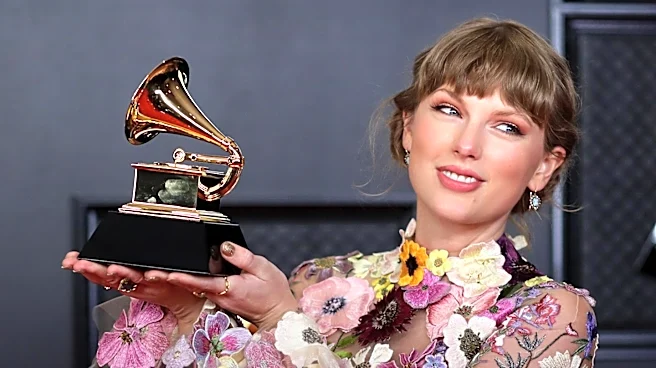
the Academy opted for a list of nominees that some critics describe as playing it 'too safe.' While Slayyyter did receive recognition in other categories, including Best New Artist and several Dance/Electronic nominations, her absence from the top album category has sparked debate. The nominations include Phoebe Bridgers for 'Lost Weekend,' Olivia Dean for 'The Art of Loving,' Bruno Mars for 'The Romantic,' Ella Langley for 'Dandelion,' RAYE for 'This Music May Contain Hope,' Olivia Rodrigo for 'you seem pretty sad for a girl so in love,' Rosalía for 'LUX,' and Taylor Swift for 'The Life of a Showgirl.' The inclusion of Taylor Swift's album, which was reportedly panned even by her dedicated fanbase, has further fueled criticism regarding the Academy's selection process and perceived bias towards commercially popular yet critically less distinguished works.
Why It's Important?
This situation highlights ongoing concerns about the Recording Academy's judgment and its impact on the music industry. The exclusion of a widely praised album like Slayyyter's 'WOR$T GIRL IN AMERICA' from the Album of the Year category, while including a reportedly 'disastrous' album from a mainstream artist, suggests a potential disconnect between critical and public reception and the Academy's recognition. This could undermine the credibility of the Grammy Awards as a true reflection of artistic merit and innovation. For emerging artists like Slayyyter, a snub in a major category can affect career momentum, visibility, and future opportunities, despite success in niche genres. Conversely, the continued nomination of established artists, even for less-acclaimed works, reinforces a perception of bias towards commercial success over artistic quality, potentially discouraging diverse and groundbreaking music from gaining mainstream recognition. This dynamic influences public perception of music quality and the artists deemed worthy of celebration.
What's Next?
The controversy surrounding the 2027 Grammy nominations is likely to continue generating discussion among music critics, fans, and industry professionals leading up to the awards ceremony. The Recording Academy may face increased pressure to address its nomination process and criteria, especially given past efforts to diversify its voter base. Future Grammy cycles could see renewed calls for greater transparency and a more equitable evaluation of artistic contributions across the musical spectrum. For Slayyyter, despite the Album of the Year snub, her multiple nominations and the strong public support for 'WOR$T GIRL IN AMERICA' could solidify her position as a significant artist, potentially leading to increased touring, collaborations, and future projects that further challenge industry norms. The debate may also prompt other artists and labels to re-evaluate the importance of Grammy recognition versus direct audience engagement and critical acclaim.
Beyond the Headlines
This Grammy controversy touches upon deeper issues within the music industry, particularly the tension between artistic integrity and commercial viability. The Academy's choices reflect a broader struggle to balance rewarding popular appeal with acknowledging innovative and critically lauded work. This can lead to a 'popularity contest' perception, where established artists with massive fan bases are favored, even if their recent output is not their strongest. It also raises questions about the influence of industry politics and marketing budgets on award nominations. The incident could spark a re-evaluation of what constitutes 'Album of the Year' in a rapidly evolving music landscape, where independent artists and diverse genres are gaining significant traction outside traditional industry structures. Ultimately, it highlights the ongoing debate about who defines musical excellence and how those definitions shape the cultural narrative around music.