





What's Happening?
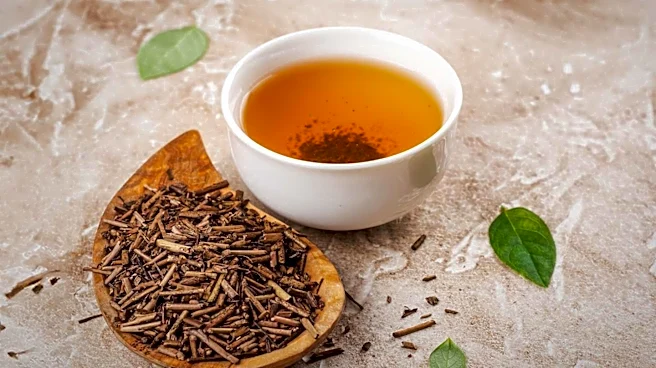
Hojicha, a roasted Japanese green tea traditionally considered an inexpensive, everyday drink in Japan, is experiencing a surge in global popularity, being repackaged as a premium product. National Geographic, Country & Town House, The Financial Times,
and the BBC have all highlighted its rising trend. This tea, made from later-picked or less expensive leaves roasted at high temperatures, is now appearing in trendy cafes worldwide, often priced similarly to matcha. Its reinvention is partly attributed to the 'matcha boom,' which established a market for Japanese teas. The shift includes its transformation from loose leaf to fine powder, enabling its use in lattes, cheesecakes, and ice creams, and allowing it to adopt the visual and ritualistic language of matcha's social media presence. While its precise origins are debated, with some historical records suggesting its existence earlier than the commonly cited 1920s Kyoto origin story, its modern marketing emphasizes wellness, craft, sustainability, and single-origin narratives.
Why It's Important?
The rise of hojicha as a premium product highlights significant trends in the global food and beverage industry, particularly concerning the marketing and commodification of traditional products. This phenomenon demonstrates how cultural items can be recontextualized for new markets, often leading to increased demand and altered perceptions of value. For consumers, this means access to new and diverse products, but also raises concerns about authenticity and pricing, as the tea's humble origins contrast with its current premium positioning. The industry's ability to leverage social media and wellness trends to elevate a product's status underscores the power of modern marketing strategies. Furthermore, the challenges in tracing hojicha's exact origins and the lack of transparency in the tea supply chain, as noted by experts like Don Mei, point to broader issues within the tea industry regarding provenance and quality claims. This situation can impact consumer trust and the long-term sustainability of traditional tea production methods if not managed ethically.
What's Next?
The trajectory of hojicha's popularity will likely continue to be influenced by its association with wellness trends and its adaptability to various culinary applications, similar to matcha. Retailers and brands are expected to further capitalize on its growing appeal, potentially leading to more diverse hojicha-based products and wider market penetration. However, the industry may face increasing scrutiny regarding the authenticity of its claims and the transparency of its supply chain, especially as consumers become more discerning about product origins and quality. Experts like Don Mei suggest that while hojicha will become a part of the 'lexicon of drinks,' its distinct color might prevent it from reaching the same heights as matcha. The ongoing debate about its origins and the 'faux premium' issue could prompt greater efforts within the tea industry to establish clearer standards and traceability, potentially influencing how other traditional food and beverage products are marketed globally.
Beyond the Headlines
The transformation of hojicha from an everyday Japanese tea to a global premium beverage reflects a broader cultural and economic dynamic: the commodification of 'authenticity' and 'tradition' in global markets. This trend often involves reinterpreting historical narratives and leveraging contemporary marketing tools, such as social media, to create new value propositions. The ethical implications arise when the perceived value of a product significantly diverges from its traditional status or production costs, potentially leading to inflated prices and misrepresentation. The lack of transparency in the tea industry, where provenance can be embellished and quality claims are hard to verify, underscores a systemic challenge. This situation highlights the tension between preserving cultural heritage and adapting to global market demands. It also prompts a re-evaluation of how 'premium' is defined and communicated, especially for products with deep cultural roots, and the responsibility of marketers to provide accurate and transparent information to consumers.