





What's Happening?
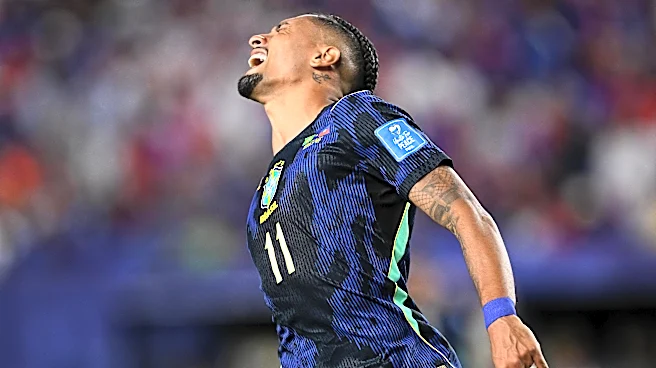
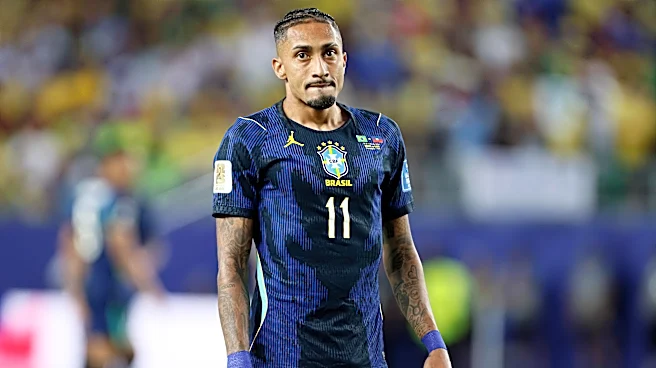
The 2026 World Cup has seen several key players sidelined due to injuries, affecting team strategies and player availability. Raphinha, a forward for Brazil and Barcelona, suffered a muscle injury during a match against Haiti, raising concerns about his
participation in the rest of the tournament. Similarly, Germany's Nico Schlotterbeck is suspected of having an ankle ligament injury, which could impact his availability for future matches. These injuries are part of a broader trend affecting multiple teams, with players like Belgium's Jérémy Doku also facing health issues. The situation has prompted teams to reassess their strategies and player rotations as they navigate the challenges of the tournament.
Why It's Important?
Injuries to key players can significantly alter the dynamics of a team, affecting their performance and strategic options. For teams like Brazil and Germany, the loss of players like Raphinha and Schlotterbeck could necessitate changes in lineup and tactics, potentially impacting their chances of advancing in the tournament. These developments also highlight the physical demands of international competitions and the importance of player fitness and management. The situation underscores the need for teams to have depth in their squads, ensuring they can adapt to unforeseen challenges and maintain competitive performance.
What's Next?
Teams affected by injuries will need to make strategic adjustments, potentially bringing in substitute players or altering their tactical approaches. The outcomes of these decisions will be crucial as the tournament progresses, with teams aiming to maintain their competitive edge despite the setbacks. Monitoring the recovery and fitness of injured players will be essential, as their potential return could influence team dynamics and performance in later stages of the World Cup.