


What's Happening?
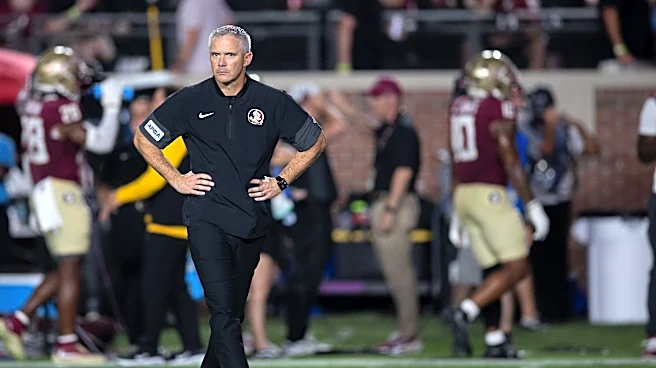
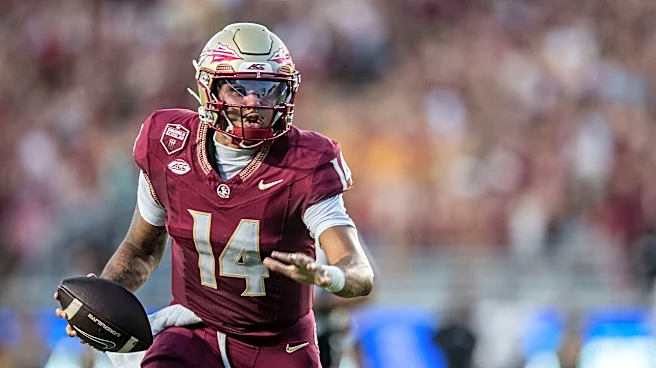
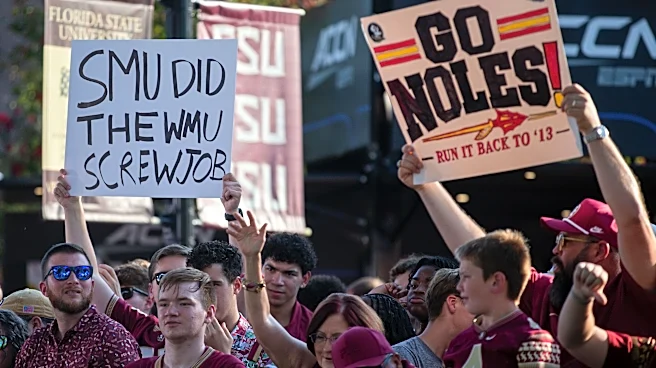
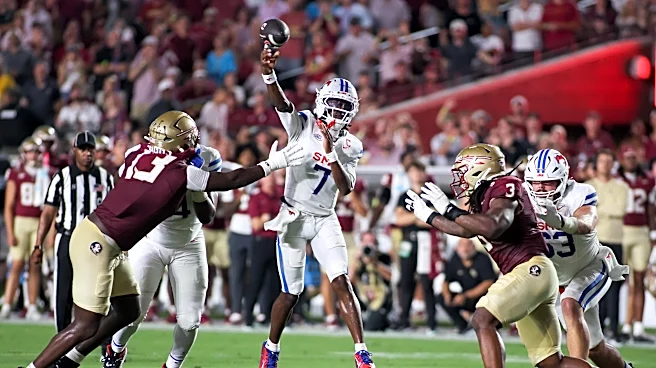
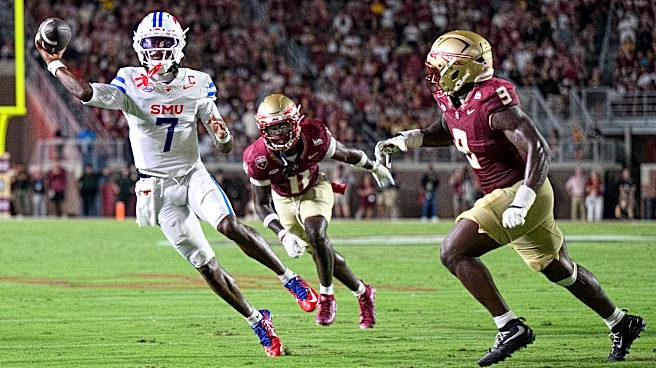
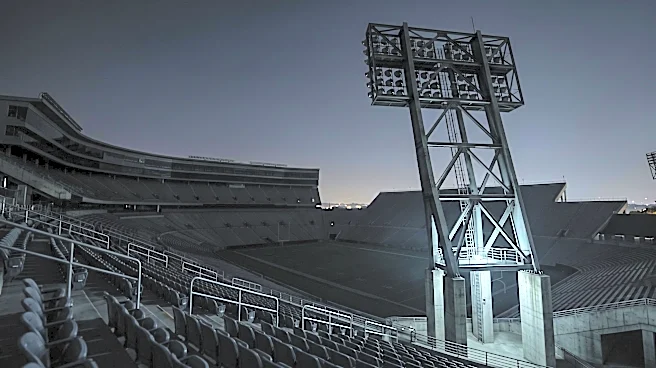
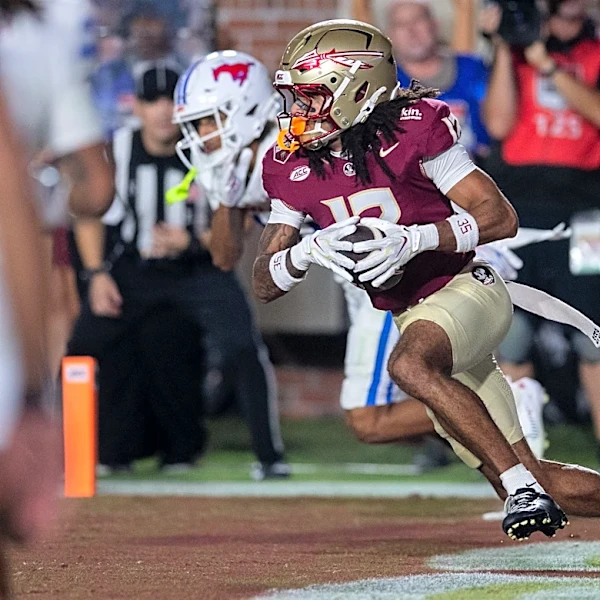
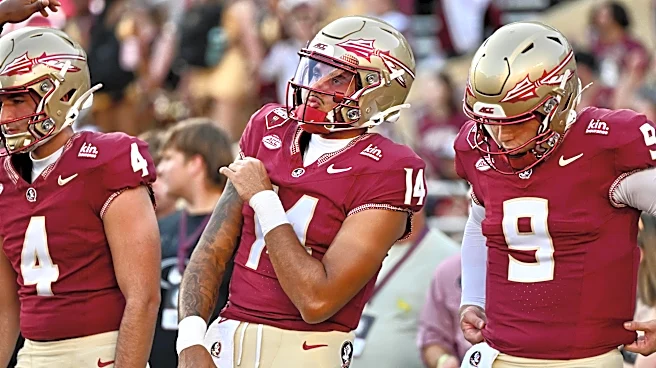
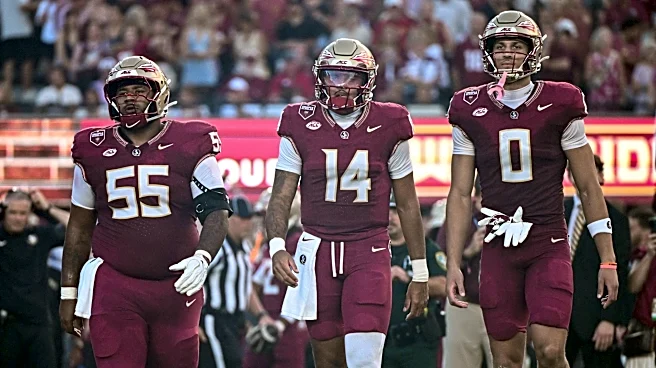
The highly anticipated college football game between No. 19 SMU and Florida State experienced a nearly two-hour delay on Monday night due to a power outage at Doak Campbell Stadium in Tallahassee, Florida. The power disruption occurred just minutes before
the scheduled kickoff, causing the stadium lights to go out. The delay lasted approximately 1 hour and 45 minutes, with the teams finally taking the field for warmups at 9 p.m. EDT and the game commencing at 9:15 p.m. Under less than ideal conditions, not all stadium lights were operational, and several critical functions were affected, including coach-to-player communication, sideline iPads, the public address announcer, and the scoreboard. On-field officials were responsible for keeping track of the game clock, though some replays were shown on the Jumbotron. Technical staff attributed the outage to an electrical short in the main transformer on the west side tower.
Why It's Important?
This significant delay and the resulting operational issues highlight the vulnerabilities of large-scale sporting events to infrastructure failures. The disruption impacted not only the players and coaching staff, who lost crucial communication tools, but also the fan experience, with a lack of scoreboard information and public announcements. For a nationally televised game, such an incident can also have broader implications for broadcast schedules and advertising revenue. The fact that a top-25 team like SMU and a major program like Florida State were affected underscores that even well-resourced institutions can face unexpected challenges. This event serves as a reminder of the importance of robust infrastructure and contingency planning for major public gatherings, especially in venues that rely heavily on complex electrical systems for both safety and operational efficiency.
What's Next?
Following the game, Florida State University and stadium management will likely conduct a thorough investigation into the cause of the electrical short and implement measures to prevent similar incidents in the future. This may involve comprehensive electrical system checks, upgrades to infrastructure, and enhanced emergency protocols. For the teams, the immediate focus will be on reviewing the game, which was played under unusual circumstances, and preparing for their next matchups. The ACC commissioner, Jim Phillips, who was present and discussed options with athletic directors, may also review the incident to inform league-wide best practices for stadium operations and emergency preparedness. Fans and broadcasters will be keen to ensure that such disruptions are minimized for future events.
Beyond the Headlines
Beyond the immediate inconvenience, this power outage touches upon broader issues of infrastructure resilience in public venues. As sporting events become increasingly reliant on advanced technology for everything from fan engagement to player performance analysis, the foundational electrical and communication systems become even more critical. This incident could prompt a re-evaluation of maintenance schedules, backup power systems, and emergency response plans across college football stadiums and other large event venues. It also subtly highlights the human element in sports, as officials had to revert to manual timekeeping, demonstrating the adaptability required when technology fails. The event serves as a case study for event organizers on the importance of anticipating and mitigating risks associated with complex technical environments.