






What's Happening?
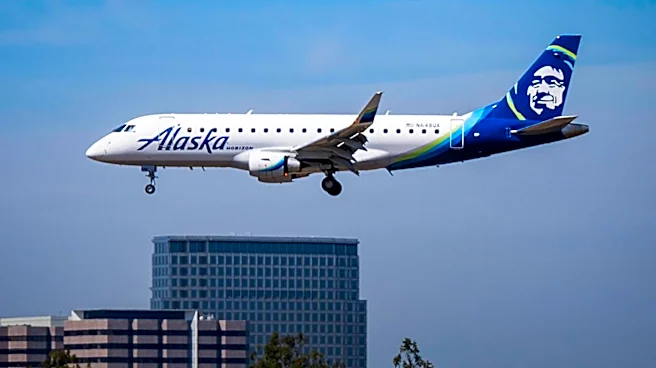
Alaska Air Group is significantly increasing its presence at Paine Field in Everett, Washington, by boosting seat capacity by 50% between this autumn and summer 2027. This expansion includes the introduction of a new nonstop service between Paine Field and San
Jose, California, set to launch on April 14, 2027, with twice-daily flights operated by Horizon Air's 76-seat Embraer E175 jets. Additionally, Alaska Airlines is upgrading existing routes from Paine Field, with Los Angeles and Portland services increasing to twice daily and transitioning to larger Boeing 737 aircraft. The San Diego and San Francisco routes will also see increased seat capacity, with the San Diego flight specifically moving to a 737 in November. This strategic move aims to cater to travelers in the north Puget Sound region by offering more convenient air service closer to home, bypassing the need to travel to Seattle-Tacoma International Airport.
Why It's Important?
This expansion is crucial for Alaska Air Group as it solidifies its dominant position in the Puget Sound market, particularly at Paine Field where it currently operates without direct competition from other major carriers. By increasing capacity and introducing new routes, Alaska Airlines is enhancing its network strategy, which includes both short-haul foundations and a growing long-haul network from Seattle. The shift to larger aircraft, known as 'upgauging,' is an efficient way to add capacity, lower cost per seat, and manage operations at a constrained terminal like Paine Field. The new San Jose route is particularly significant, as it directly connects the technology hubs of Puget Sound and Silicon Valley, catering to business travelers with its twice-daily frequency. This move reinforces Alaska Airlines' broader strategy to strengthen its position as a leading carrier on the West Coast and integrate its operations with Hawaiian Airlines.
What's Next?
The new San Jose route will commence on April 14, 2027, with other capacity increases and aircraft changes rolling out between this autumn and summer 2027. Alaska Airlines will continue to monitor demand and potentially explore additional destinations beyond the West Coast from Paine Field, such as Denver, Phoenix, or Las Vegas, which would signal further growth ambitions for the airport. The airline will also need to manage the physical capacity constraints of Paine Field's small terminal, which could limit future expansion without further infrastructure investment. The success of this expansion could also attract renewed interest from other carriers, potentially reintroducing competition at Paine Field. Alaska Airlines' early investment in frequency and larger aircraft aims to position it strongly to defend its market share should new competitors emerge.
Beyond the Headlines
The strategic decision to expand at Paine Field highlights a broader trend in the airline industry: optimizing regional airports to serve specific, affluent catchment areas. This approach prioritizes customer convenience and aims to capture market share by reducing travel friction for local populations. The lack of direct competition at Paine Field offers Alaska Airlines a unique advantage, allowing it to grow capacity and solidify customer loyalty in a key region. This move also reflects the airline's focus on efficient growth through 'upgauging,' a practice that maximizes existing infrastructure and reduces operational costs per seat. The emphasis on connecting tech corridors like Puget Sound and Silicon Valley underscores the importance of business travel in airline network planning, with flight timings designed to facilitate day trips and corporate needs. This localized, strategic growth at Paine Field is a critical component of Alaska Air Group's larger objective to become a more global, premium, and diversified airline.