

What's Happening?
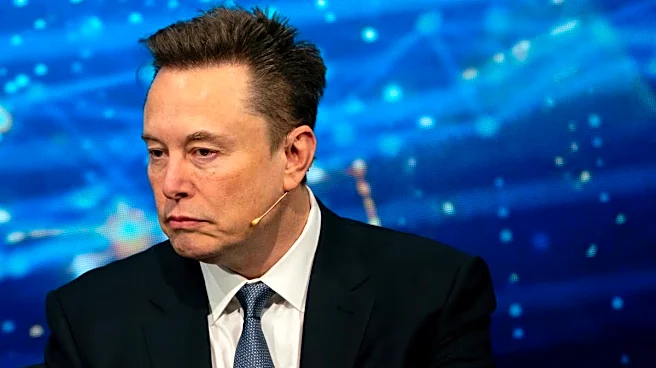
Tesla's Robotaxi division has generated buzz with social media posts hinting at its forthcoming Cybercab driverless vehicles, specifically mentioning 'no steering wheel, no pedals.' These teasers, including a post from CEO Elon Musk stating 'A storm of
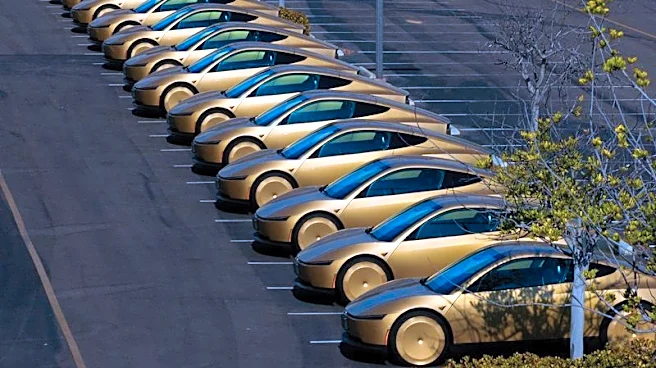
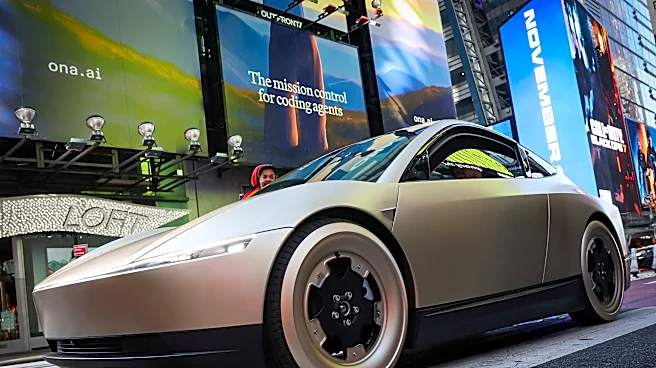
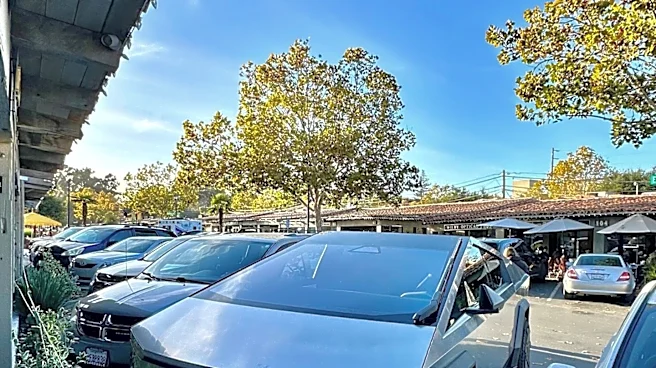
Cybercabs,' precede a planned event in Austin, Texas, where more details about the Cybercab are expected to be revealed. The company first unveiled the design of this two-seater, driverless vehicle with butterfly doors almost two years ago. Tesla has been conducting tests of a version of this 'purpose-built' robotaxi, equipped with human drivers and traditional controls, in various U.S. markets. Recent video clips shared on social media by an analyst and Tesla enthusiasts show Cybercab vehicles operating on public streets in Austin without a steering wheel or a driver, further fueling anticipation for the official announcement.
Why It's Important?
This development is significant for the U.S. transportation industry and the broader autonomous vehicle sector. Tesla's entry into the robotaxi market with a purpose-built vehicle that lacks traditional controls could intensify competition with existing players like Waymo, which currently holds a substantial lead. The successful deployment of such vehicles could revolutionize urban mobility, offering new options for ride-sharing and potentially reducing traffic congestion and the need for personal car ownership in cities. For Tesla, a successful robotaxi service could unlock a new revenue stream and significantly boost its valuation, as investors are keenly watching for the company to deliver on its long-standing promises of full self-driving capabilities. However, the regulatory landscape and public acceptance of fully autonomous vehicles without human oversight remain critical hurdles that will determine the pace and scale of adoption.
What's Next?
Tesla is scheduled to provide more details about the Cybercab at an event in Austin, Texas. Following this announcement, the company is expected to outline its deployment strategy, including the timeline for launching the robotaxi service in various U.S. cities. Key next steps will involve securing necessary regulatory approvals for operating fully driverless vehicles in specific geofenced areas, as well as scaling up its fleet of Cybercabs. The reaction from competitors, particularly Waymo, will be closely watched, as will the public's response to the availability of a truly driverless ride-hailing option. Further testing and refinement of the autonomous technology will also be crucial to ensure safety and reliability, which are paramount for widespread adoption and regulatory confidence.
Beyond the Headlines
The introduction of a 'no steering wheel, no pedals' vehicle like the Cybercab raises profound questions about the future of driving, urban planning, and the human-machine interface. Ethically, the complete removal of human control shifts the responsibility for safety entirely to the autonomous system and its developers, prompting debates about liability in the event of accidents. Legally, existing traffic laws and insurance frameworks will need significant adaptation to accommodate vehicles that operate without human intervention. Culturally, it challenges deeply ingrained notions of personal freedom and control associated with driving, potentially leading to a societal shift in how individuals perceive and interact with transportation. The long-term implications could include a re-evaluation of urban infrastructure, with less need for parking and potentially more efficient use of road space, fundamentally altering the landscape of American cities.