






What's Happening?
General Motors (GM) is a U.S.-based multinational automotive manufacturer that designs, builds, and sells vehicles, vehicle parts, and mobility solutions. The company's operations span electric vehicles (EVs), autonomous driving technologies, financing
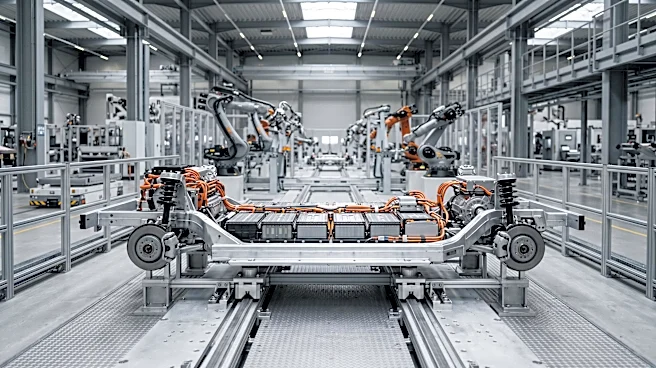
services through GM Financial, and software-enabled vehicle platforms. GM's core automotive brands include Chevrolet, GMC, Cadillac, and Buick. The company generates revenue from vehicle sales, financing, aftermarket parts, and connected services. Founded in 1908, GM underwent a government-supported restructuring in 2009 after the 2008–2009 financial crisis. In recent years, GM has strategically shifted its focus towards electrification, software-defined vehicles, and autonomous mobility. This strategy involves substantial capital expenditures in expanding EV production capacity, battery manufacturing, and digital vehicle platforms, including dedicated EV assembly plants and battery cell facilities. GM also invests in hydrogen fuel-cell technologies and commercial opportunities in defense, logistics, and industrial applications.
Why It's Important?
GM's strategic pivot towards electrification and autonomous technology is crucial for its long-term competitiveness and the broader U.S. automotive industry. By investing heavily in EVs and related infrastructure, GM aims to capture a significant share of the growing electric vehicle market, which is vital for meeting evolving consumer demands and environmental regulations. This shift also positions GM to compete with new entrants in the EV space and established global automakers. The development of software-defined vehicles and autonomous driving capabilities could unlock new revenue streams through subscription services and advanced mobility solutions, transforming the traditional automotive business model. Success in these areas could solidify GM's leadership in automotive innovation, create new jobs in manufacturing and technology, and contribute to the U.S.'s technological advancement in sustainable transportation. Conversely, failure to execute this transition effectively could lead to market share loss and diminished influence in a rapidly evolving industry.
What's Next?
GM is expected to continue its aggressive investment in EV production capacity and battery manufacturing, with ongoing development of its Ultium battery platform and electric propulsion systems. The company will likely focus on scaling up EV production to meet demand and further localize its North American battery supply chain. Continued efforts will be directed towards advancing its software-defined vehicle architecture to support over-the-air updates and connected services, aiming for increased recurring revenue. GM's autonomous vehicle subsidiary, Cruise, will likely face ongoing scrutiny regarding operational expansion, safety, and regulatory compliance, which will dictate its future growth trajectory. The company will also pursue commercial opportunities in electric delivery and logistics through BrightDrop. Future announcements may include new EV models, expanded charging infrastructure partnerships, and further details on its software monetization strategies as it aims for increased profitability by 2027.
Beyond the Headlines
GM's transformation extends beyond just vehicle production; it represents a fundamental shift in the company's identity from a traditional automaker to a mobility technology provider. This transition has profound implications for the automotive supply chain, requiring new skill sets in software development, battery chemistry, and artificial intelligence. The emphasis on software-defined vehicles could lead to a more personalized and adaptable driving experience, but also raises questions about data privacy and cybersecurity. The push for autonomous vehicles, while promising enhanced safety and efficiency, introduces complex ethical and legal challenges regarding liability and decision-making in unforeseen circumstances. Furthermore, GM's commitment to hydrogen fuel-cell technologies suggests a diversified approach to future energy solutions, potentially influencing broader energy infrastructure development and reducing reliance on a single EV technology. This strategic evolution could redefine the future of transportation and urban planning.