


What's Happening?
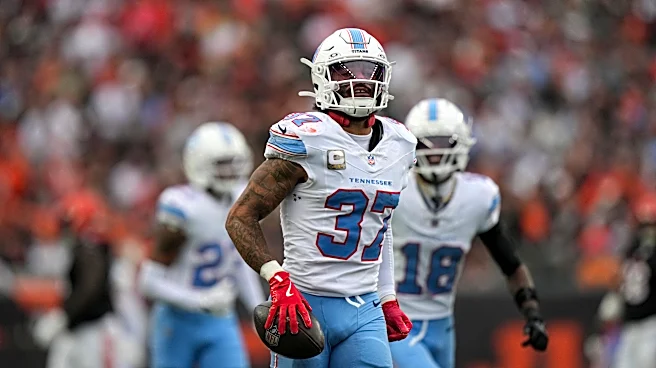
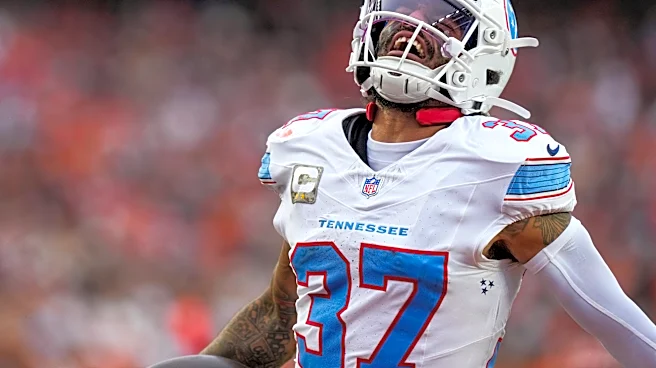
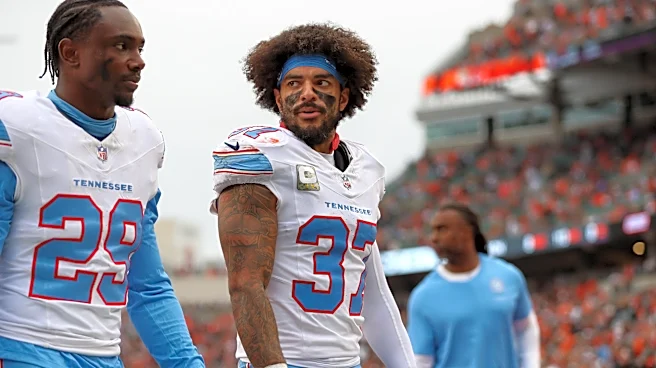
Cedric Gray, a linebacker for the Tennessee Titans, has become the longest-tenured defender on the team's roster, despite being in only his third NFL season. This development follows significant roster changes, including the recent trades of prominent
players Jeffery Simmons and Amani Hooker. Additionally, Gray's 2024 draft classmates, James Williams and Jaylen Harrell, are currently on injured reserve. Gray expressed surprise at this new status, acknowledging the contributions of former teammates like Simmons and Hooker, and recognizing that the team is entering a 'new era.' He indicated his readiness to step up and assume a leadership role within the defense.
Why It's Important?
This shift in the Titans' defensive leadership highlights a broader trend of rapid roster turnover in the NFL, where even relatively young players can quickly become veteran figures due to strategic trades, injuries, and team rebuilding efforts. For the Titans, Gray's new role signifies a transition period, potentially indicating a focus on developing younger talent and establishing a new defensive identity. His leadership will be crucial for integrating new players and maintaining defensive cohesion. For the league, it underscores the dynamic nature of team compositions and the constant pressure on players to adapt and perform, as well as the impact of front-office decisions on team culture and on-field performance. The rapid change also presents both challenges and opportunities for player development and team strategy.
What's Next?
As Cedric Gray steps into his role as the longest-tenured defender, the immediate focus will be on his performance and leadership during the upcoming season. The Titans' coaching staff will likely rely on him to guide newer players and help solidify the defense. His ability to adapt to this increased responsibility and maintain a high level of play will be critical for the team's success. The team will also continue to evaluate its roster, potentially making further adjustments to complement the new defensive core. The performance of the defense under Gray's informal leadership will be a key indicator of the team's direction in this 'new era.'
Beyond the Headlines
The rapid ascent of Cedric Gray to a leadership position reflects the evolving landscape of professional sports, where longevity is increasingly measured in shorter timeframes due to the demands of the game and strategic team management. This situation could influence how teams approach player contracts and development, potentially prioritizing players who demonstrate early leadership qualities and adaptability. It also raises questions about the psychological impact on young athletes who are thrust into veteran roles, requiring them to mature quickly both on and off the field. The Titans' strategy could serve as a case study for other NFL franchises navigating similar periods of significant roster change.