





What's Happening?
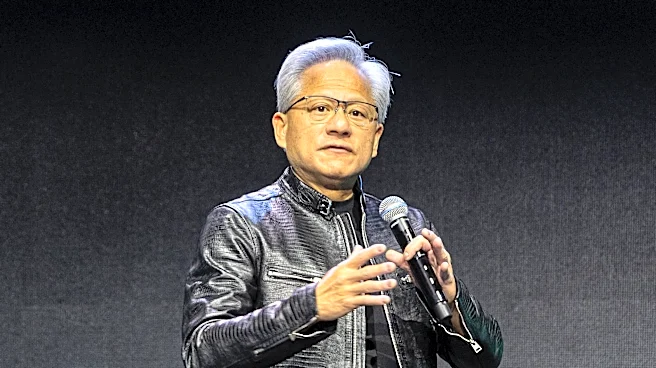
Jensen Huang, co-founder of Nvidia, has been reinstated as president, CEO, and board member of the company, effective immediately. This decision by Nvidia's board follows his resignation on November 12 amidst reports of alleged extramarital affairs. Following
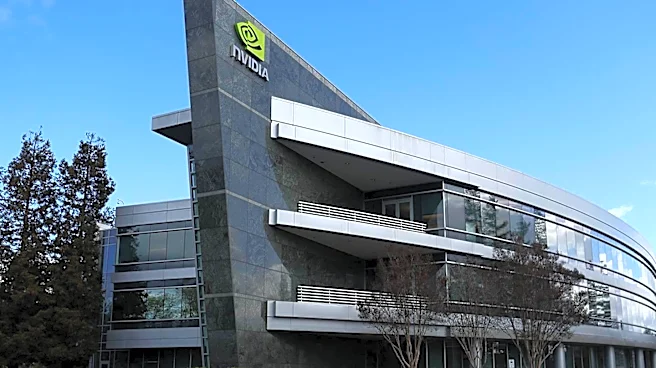
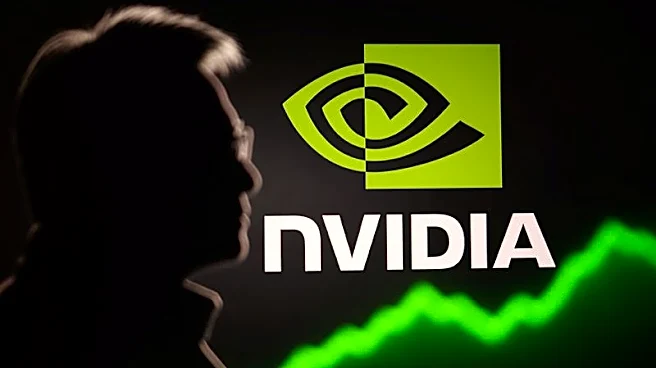
his reinstatement, Nvidia's shares surged by 31.5% on Monday, closing at $165.05, marking the largest single-day gain for the company since 2003. This rally added approximately $950 billion to Nvidia's market value, bringing its total to around $4 trillion. Huang's personal fortune also saw a significant increase, jumping by $33.7 billion to $143.8 billion, making him the world's 13th-richest person, according to Forbes' real-time billionaire rankings. He owns over 3.5% of Nvidia, which he took public in 1999. Social media videos cited by CNN showed employees cheering his return to Nvidia's California headquarters.
Why It's Important?
The reinstatement of Jensen Huang as Nvidia's CEO carries substantial importance for the technology sector and financial markets. His return has immediately instilled confidence among investors, as evidenced by the dramatic increase in Nvidia's stock price and market capitalization. This surge highlights the significant influence of key leadership figures on company valuation and investor sentiment, particularly in high-growth sectors like semiconductors and artificial intelligence. Nvidia's substantial market value increase impacts the broader U.S. stock market, potentially influencing tech indices and investor portfolios. The company's performance is often seen as a bellwether for the health of the tech industry, given its critical role in supplying chips for AI, data centers, and other advanced technologies. The rapid recovery in stock value also underscores the market's willingness to overlook previous controversies when a leader is perceived as indispensable to a company's strategic direction and financial success.
What's Next?
Following Jensen Huang's reinstatement, the immediate focus will likely be on Nvidia's continued performance in the highly competitive semiconductor market. The company is expected to maintain its trajectory in AI and data center technologies, areas where it holds a dominant position. Investors will be closely watching for any strategic announcements or shifts in company direction under Huang's renewed leadership. The significant increase in market value suggests a strong market expectation for sustained growth and innovation from Nvidia. The company's ability to leverage this renewed confidence into tangible business results, such as new product launches or expanded market share, will be crucial. Additionally, the incident surrounding Huang's brief departure and subsequent return may prompt discussions within corporate governance circles regarding leadership stability and succession planning in major tech firms.
Beyond the Headlines
The rapid reinstatement of Jensen Huang and the subsequent market reaction highlight several deeper implications within the corporate landscape. It underscores the immense power and perceived indispensability of founder-CEOs in certain tech companies, where their vision and leadership are often intertwined with the company's identity and success. This event also touches upon the complex interplay between personal conduct, corporate governance, and market valuation. Despite the initial controversy surrounding his resignation, the market's overwhelming positive response to his return suggests that, for many investors, a leader's perceived ability to drive financial performance can outweigh concerns about personal conduct. This scenario could set a precedent or at least spark debate about the criteria used to evaluate leadership in publicly traded companies, particularly in sectors where innovation and market dominance are paramount. It also reflects the high stakes involved in leadership transitions within trillion-dollar companies and the immediate, tangible impact such changes can have on global financial markets.