



What's Happening?
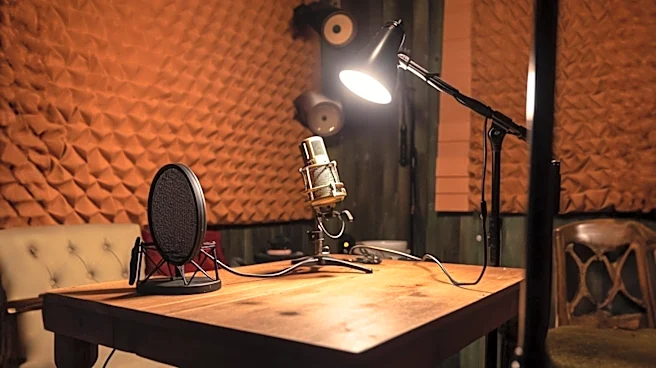
Stephanie McMahon has openly discussed the personal challenges she faced after stepping down from her executive position at WWE. During an appearance on Charlotte Flair's 'What’s Your Story?' podcast, McMahon revealed that she initially struggled with
her identity and self-worth, questioning who she was without the executive title. She had previously taken a leave of absence in 2022 to prioritize her family, returning to serve as co-CEO alongside Nick Khan after Vince McMahon's retirement. However, she resigned in January 2023 following her father's return to the company. McMahon explained that the transition from being a working executive to a life less centered on her career brought about difficult self-reflection. She questioned if she was 'less of someone' because she no longer held that role and if she still needed to prove herself. Over time, she has come to appreciate the opportunity to devote more time and love to her family, recognizing that this is what matters most to her. Despite her departure from an executive role, McMahon maintains a connection to WWE through her podcast and her induction into the company's Hall of Fame.
Why It's Important?
Stephanie McMahon's candid reflections offer a significant insight into the personal impact of high-profile corporate departures, particularly within a family-run enterprise like WWE. Her experience highlights the common struggle individuals face in redefining their identity and purpose outside of demanding professional roles. This narrative resonates with many professionals, especially women, who navigate career ambitions alongside personal and family commitments. For the WWE, her continued connection through her podcast and Hall of Fame status underscores the enduring legacy of the McMahon family within the organization, even as leadership transitions occur. The public nature of her struggle and subsequent acceptance can serve as a powerful message about self-worth beyond professional titles, potentially influencing corporate cultures to better support employees transitioning out of executive roles. Her story also subtly reinforces the evolving dynamics within WWE's leadership, with her husband, WWE Chief Content Officer Paul 'Triple H' Levesque, and WWE President Nick Khan, both expressing openness to her potential return, indicating a complex interplay of personal and professional relationships at the top of the company.
What's Next?
While Stephanie McMahon has found peace in her current focus on family, her continued connection to WWE through her podcast and Hall of Fame status leaves the door open for future involvement, though not necessarily in an executive capacity. The public support from her husband, Paul 'Triple H' Levesque, and WWE President Nick Khan regarding her potential return, if she chooses, suggests that her influence within the company remains significant. Her story may inspire other individuals in high-pressure corporate environments to prioritize personal well-being and family, potentially leading to broader discussions about work-life balance in the entertainment industry. For WWE, maintaining a positive relationship with a figure as iconic as Stephanie McMahon is crucial for brand continuity and fan engagement. Her narrative could also inform how companies manage the transitions of long-serving executives, emphasizing support for their post-corporate identities. The ongoing success of her podcast could further solidify her role as a thought leader within the wrestling community, even without a formal executive title.
Beyond the Headlines
Stephanie McMahon's journey beyond her executive role touches upon deeper societal themes concerning identity, gender roles, and the pressures of corporate leadership. Her struggle to define herself outside of a powerful professional title reflects a broader cultural challenge where self-worth is often intrinsically linked to career achievements. This is particularly pertinent for women in leadership, who often face unique expectations and scrutiny. Her eventual realization that 'it’s okay to enjoy my life' and prioritize family offers a counter-narrative to the relentless pursuit of professional advancement, advocating for a more holistic view of success. The fact that her family's legacy is so intertwined with WWE adds another layer of complexity, as her personal choices inevitably have public implications for the brand. Her story encourages a re-evaluation of what constitutes 'success' and 'contribution' in a post-corporate life, suggesting that influence and impact can extend beyond formal positions. It also highlights the evolving nature of family businesses, where personal decisions of key members can significantly shape the company's public image and internal dynamics.