







What's Happening?
Ayurveda, an ancient Indian system of health and wellbeing, is characterized by its holistic approach to the human body, viewing it as an interconnected ecosystem. This traditional practice focuses on maintaining vitality and supporting healthy aging,
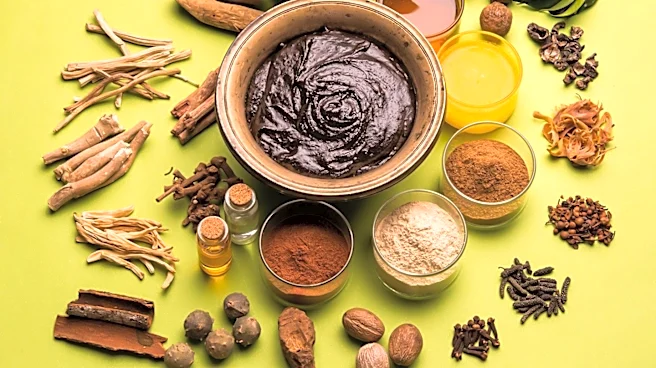
often through concepts like Rasayana, which involves rejuvenative formulations. Haritaki (Terminalia chebula), a traditional Ayurvedic fruit, is frequently used in these Rasayana preparations to support digestion, bowel regularity, nourishment, and overall wellbeing. While modern research has explored Haritaki's antioxidant, antimicrobial, and anti-inflammatory properties, much of the evidence comes from laboratory and animal studies, with limited robust clinical evidence for specific health claims. The preparation of Haritaki Rasayana can vary, often involving the pulverization of dried Haritaki fruit, sometimes combined with ingredients like honey, ghee, or other herbal powders. The system also incorporates daily and seasonal routines, known as Dinacharya and Ritucharya, to help individuals adapt to environmental changes and maintain balance.
Why It's Important?
The growing interest in Ayurveda in the U.S. reflects a broader societal shift towards holistic and preventive healthcare approaches. As individuals seek alternatives or complements to conventional medicine, traditional systems like Ayurveda offer a framework that addresses lifestyle, diet, and mental wellbeing alongside physical health. The emphasis on natural ingredients and personalized care resonates with consumers looking for more integrated health solutions. However, the limited clinical evidence for many Ayurvedic claims presents a challenge for its widespread acceptance within the U.S. medical community, which typically relies on rigorous scientific validation. The potential for adverse effects, particularly with concentrated herbal formulations or interactions with prescription medications, underscores the importance of professional guidance. For the wellness industry, this trend signifies an expanding market for Ayurvedic products and services, but also highlights the need for transparent sourcing, quality control, and responsible marketing to ensure consumer safety and build trust.
What's Next?
The future of Ayurveda in the U.S. will likely involve continued efforts to bridge the gap between traditional knowledge and modern scientific understanding. This may include more clinical research to validate the efficacy and safety of Ayurvedic practices and formulations, potentially leading to greater integration into mainstream healthcare. Educational programs, such as mentorships for Ayurvedic graduates, will be crucial in building clinical confidence and establishing sustainable practices. Consumers can expect to see a wider array of Ayurvedic products, from herbal supplements to wellness retreats, but will also need to exercise discernment regarding product quality and claims. Regulatory bodies may increase scrutiny on the labeling and marketing of Ayurvedic products to ensure consumer protection, especially concerning potential interactions with conventional medicines or the presence of contaminants. The ongoing dialogue between traditional practitioners and the scientific community will shape how Ayurveda is perceived and utilized in the U.S. healthcare landscape.
Beyond the Headlines
The embrace of Ayurveda in the U.S. extends beyond mere health trends, touching upon deeper cultural and philosophical dimensions. It represents a growing appreciation for ancient wisdom traditions and a re-evaluation of health beyond the purely biomedical model. This shift encourages individuals to take a more active role in their wellbeing, fostering a sense of empowerment through personalized lifestyle choices. However, it also raises questions about cultural appropriation and the faithful representation of traditional practices in a Western context. Ensuring that Ayurvedic principles are understood and applied authentically, rather than being reduced to superficial trends, is a critical ethical consideration. The integration of Ayurveda also highlights the tension between traditional healing systems, which often rely on centuries of empirical observation, and modern scientific paradigms that demand quantifiable evidence. Navigating this complex interplay will be essential for the responsible and beneficial evolution of Ayurvedic practices within the diverse U.S. society.