





What's Happening?
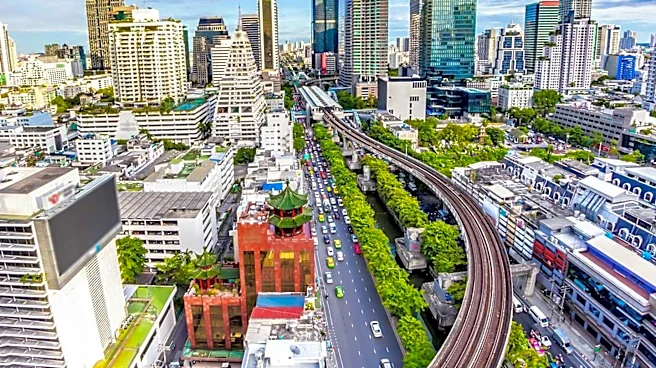
Bangkok is emerging as Southeast Asia's fastest-growing hub for ultra-high-net-worth (UHNW) individuals, defined as those with net assets exceeding US$30 million. A report by U.S.-based wealth intelligence firm Altrata projects that Bangkok's UHNW population
will increase by over 50%, from 1,210 in 2025 to approximately 1,840 by 2030, representing an average annual growth rate of 8.7%. This growth positions Bangkok as the 12th-fastest-growing major UHNW city globally among the 100 largest urban economies by nominal GDP, surpassing Jakarta in Southeast Asia. Thailand as a whole had 2,090 UHNW individuals in 2025, with 1,210 residing primarily in Bangkok. The global UHNW population reached a record 556,850 individuals in 2025, marking a 14.4% increase from the previous year and the strongest expansion since 2017.
Why It's Important?
This trend highlights Bangkok's increasing appeal as a global wealth center, driven by strong domestic entrepreneurship and growing international interest, despite ongoing economic and geopolitical uncertainties. The significant growth in UHNW individuals in Bangkok indicates a robust wealth creation environment, primarily fueled by self-made entrepreneurs, many of whom received initial support from inherited capital. This concentration of wealth can have profound implications for local economies, influencing luxury markets, real estate development, and investment patterns. For U.S. businesses and investors, this signals emerging opportunities in sectors catering to high-net-worth individuals in Southeast Asia, as well as potential shifts in global investment flows towards dynamic urban centers like Bangkok. The global increase in UHNW individuals also reflects broader trends in wealth accumulation and economic recovery post-pandemic.
What's Next?
Altrata anticipates the global UHNW population to reach 746,570 by 2030, with total wealth increasing to $85 trillion. This projected growth suggests continued expansion in wealth management services, luxury goods, and high-end real estate markets worldwide. For Bangkok, its sustained growth as a UHNW hub is likely to attract further foreign direct investment and foster an environment conducive to entrepreneurship. This could lead to increased competition in various sectors as more affluent individuals seek investment opportunities and lifestyle amenities. Policymakers in Thailand may need to consider infrastructure development and regulatory frameworks to accommodate this influx of wealth and ensure sustainable growth. The report also indicates that Hong Kong remains a dominant Asian wealth center, ranking second globally behind New York, suggesting ongoing competition among major cities for attracting and retaining ultra-wealthy residents.
Beyond the Headlines
The rise of Bangkok as a prominent UHNW hub reflects a broader shift in global wealth dynamics, with emerging economies playing an increasingly significant role in wealth creation. This phenomenon can lead to both opportunities and challenges. While it can stimulate economic growth and innovation, it may also exacerbate wealth inequality and put pressure on urban resources and infrastructure. The report's finding that most UHNW individuals in Bangkok are self-made entrepreneurs, albeit with some inherited capital, underscores the importance of entrepreneurial ecosystems in fostering wealth. This trend could inspire other developing cities to cultivate environments that support business creation and innovation, potentially leading to a more distributed global wealth landscape over the long term. The ethical implications of rapid wealth accumulation, including its impact on social equity and environmental sustainability, will likely become more pressing as these trends continue.