
What's Happening?
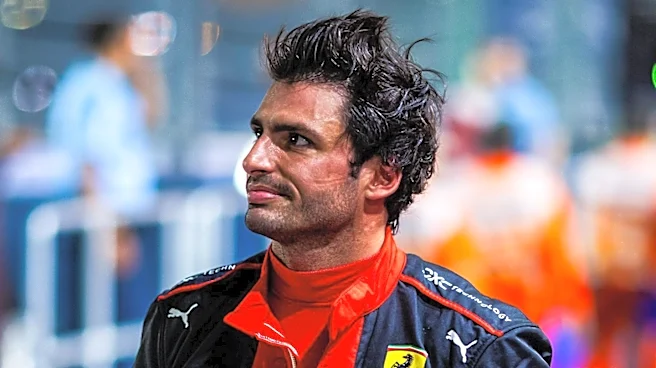
Carlos Sainz Jr., a driver for Williams in Formula 1, has openly expressed his frustration with the team's performance during the 2026 season. As reported by HolaNews, Sainz stated that he dislikes being
a 'test driver' during race weekends, despite enjoying testing and simulator work. He finds it 'extremely frustrating' to approach Grand Prix events without any realistic chance of scoring points. Sainz noted that this is his first season where even a perfect race execution does not guarantee a point. He also highlighted the disparity in development, questioning how teams like McLaren and Red Bull continue to introduce numerous upgrades throughout the year while Williams has been constrained by the budget cap since their second upgrade. Sainz emphasized that he cannot foresee enduring many more seasons like this, as the lack of competitiveness is wearing him down.
Why It's Important?
Sainz's candid remarks shed light on the significant competitive imbalance within Formula 1, particularly for teams operating under tighter budget constraints. His frustration underscores the challenge of maintaining driver morale and motivation when a team consistently struggles to compete for points. For Williams, a team with a rich history in F1, this situation could impact their ability to attract and retain high-caliber drivers in the long term. The inability to match the development pace of leading teams, as described by Sainz, suggests that the current budget cap regulations might not be fully achieving their goal of leveling the playing field. This disparity can lead to a less engaging sport for fans, as a predictable hierarchy of performance emerges, potentially diminishing the excitement of races where only a few teams are genuinely competitive.
What's Next?
Williams will likely face increased scrutiny and pressure to improve their performance and development capabilities for the upcoming seasons. Sainz's public statements could prompt internal discussions within the team about their strategic approach to car development and resource allocation. The suggestion of an ADUO (mechanism introduced to help Formula One engine manufacturers whose performance lags behind) for budgetary or facility upgrades for less competitive teams, as mentioned by Sainz, could become a more prominent topic in F1 governance discussions. If the team fails to demonstrate significant progress, Sainz may seek opportunities with more competitive outfits, potentially leading to a change in the driver lineup. The focus will be on how Williams utilizes the remaining races of 2026 to gather data and prepare for a more competitive 2027 season.
Beyond the Headlines
The frustration voiced by Carlos Sainz Jr. reflects a deeper issue within Formula 1 concerning the sustainability of competitive racing for all teams. While budget caps were introduced to prevent runaway spending and promote closer competition, the reality, as perceived by Sainz, is that some teams still manage to out-develop others significantly. This raises questions about the efficacy of current regulations and whether they inadvertently create a 'two-tier' system where some teams are perpetually relegated to a testing role. The psychological impact on drivers, who are elite athletes driven by the pursuit of victory, is also a critical, often overlooked, aspect. A sport where a significant portion of its participants feel they have no chance to win risks losing its appeal and the passion of its competitors. This situation could necessitate a re-evaluation of F1's financial and technical regulations to ensure a more equitable and exciting competitive landscape.