







What's Happening?
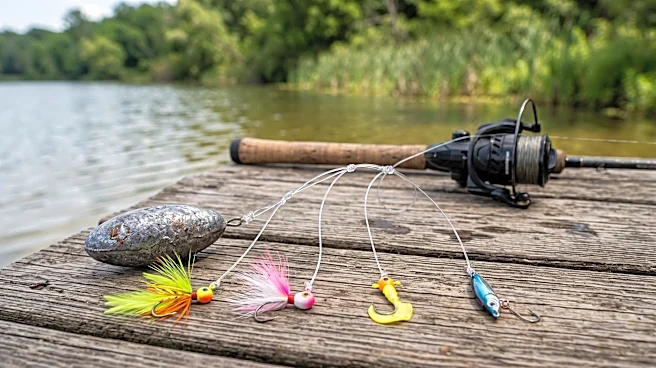
A fishing guide outlines the 'spider rig' technique as an effective method for catching crappie when the fish are scattered across flats and channel edges. This specialized rig is designed to cover a wider area, particularly when crappie are active but
not schooling tightly. The setup typically involves using a 1 oz bank sinker or a ¼–¾ oz egg sinker. From this main weight, two to four drop lines are deployed, ranging from 12 to 18 inches in length, or alternatively, two leaders of 12 and 15 inches. The guide emphasizes that while spider rigging is effective for scattered fish, a cast jig is often more suitable when crappie are highly active, as it allows for even greater water coverage. The technique requires a boat, distinguishing it from bank fishing methods like slip floats or fixed bobbers. The guide also notes that for summer fishing and in stained water, crankbaits and spinners are often preferred lures.
Why It's Important?
This detailed explanation of the 'spider rig' technique is important for recreational and competitive crappie anglers seeking to optimize their fishing strategies. Understanding specific rigging methods like this can significantly improve catch rates, especially in challenging conditions where fish are dispersed. For the fishing tackle industry, detailed guides like this can influence product demand, particularly for specialized sinkers, lines, and hooks recommended for spider rigging. Anglers who master such techniques may also contribute to local fishing economies through increased participation in fishing trips and purchases of specialized gear. Furthermore, the emphasis on adapting techniques to fish behavior (scattered vs. active) highlights the importance of nuanced approaches in angling, promoting more skilled and successful fishing practices within the community.
What's Next?
Anglers interested in crappie fishing are likely to experiment with the 'spider rig' technique, especially when faced with conditions where crappie are scattered. This could lead to increased sales of specific tackle components mentioned, such as bank sinkers, egg sinkers, and appropriate line weights. Fishing forums and communities may see more discussions and shared experiences regarding the effectiveness and variations of this rig. Tackle manufacturers might respond by marketing pre-assembled spider rigs or kits, making it easier for anglers to adopt the method. Additionally, fishing guides and content creators may produce more instructional videos or articles demonstrating the setup and deployment of the spider rig, further popularizing its use among the crappie fishing community.
Beyond the Headlines
The detailed breakdown of fishing rigs like the 'spider rig' reflects a broader trend in recreational fishing towards specialization and precision. Modern angling is increasingly moving beyond basic techniques, with enthusiasts seeking highly specific methods tailored to particular species, environments, and fish behaviors. This drive for optimization not only enhances the fishing experience but also fosters a deeper understanding of aquatic ecosystems and fish biology. The continuous development and sharing of such techniques, often through online platforms and specialized guides, contribute to a rich subculture within the broader outdoor recreation industry. It also underscores the economic impact of niche markets within the fishing industry, where specialized gear and knowledge can command significant value among dedicated participants.