


What's Happening?
Mitch Tischler, co-host of the Beltway Football Podcast, has voiced concerns regarding the Washington Commanders' decision to remain inactive during the NFL Trade Deadline. Tischler expressed disappointment, suggesting that the franchise should prioritize
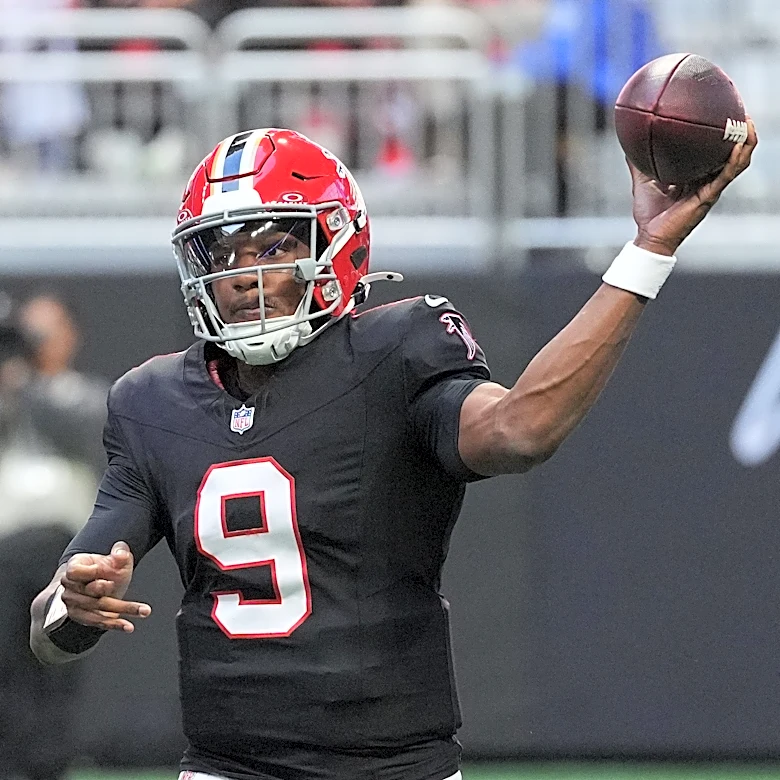
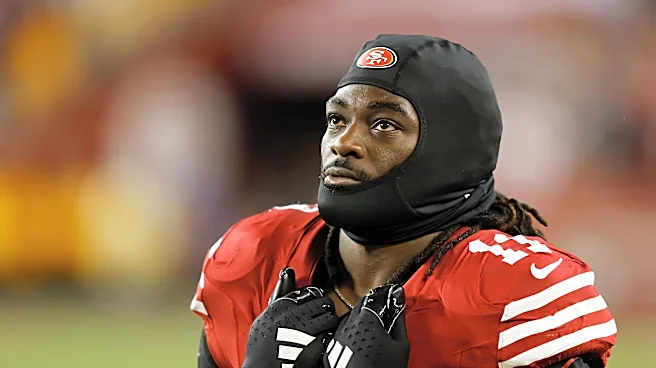
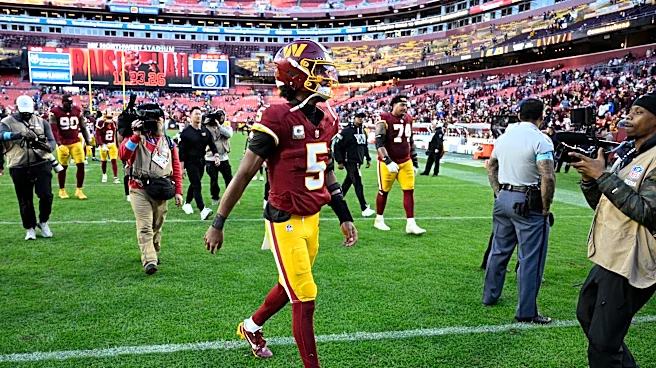
its long-term future over the immediate gratification of potentially winning a weak NFC East division. He questioned whether decisions within the organization are being made to protect individual jobs rather than to benefit the long-term health of the team. Tischler hopes that owner Josh Harris has reassured General Manager Adam Peters about his job security, regardless of the season's outcome. Additionally, he noted that offensive issues appear to be worsening late in the season, citing comments from Jayden Daniels about David Blough's struggles, and dismissed the idea of Brandon Aiyuk being a suitable fit for the Commanders.
Why It's Important?
Tischler's critique highlights a significant concern for sports franchises: the balance between short-term performance and long-term strategic development. For the Washington Commanders, the perceived inaction at the trade deadline suggests a potential organizational hesitancy to make bold moves that could reshape the team's future, possibly due to internal job security anxieties. This approach could impact fan morale, player development, and the team's competitive standing in future seasons. The emphasis on owner Josh Harris's role underscores the critical influence of leadership in setting a clear vision and fostering a culture where difficult but necessary decisions are made for the franchise's ultimate success. Such strategic missteps can lead to prolonged periods of underperformance, affecting revenue, fan engagement, and the overall brand value of the team.
What's Next?
The Washington Commanders will continue their current season with the roster largely unchanged from the trade deadline. The performance of the team in the remaining games will be closely scrutinized, particularly in light of the offensive struggles mentioned by Tischler. The focus will likely shift to the upcoming offseason, where General Manager Adam Peters and owner Josh Harris will face critical decisions regarding coaching staff, player acquisitions, and the overall direction of the franchise. The pressure to demonstrate a clear long-term strategy will intensify, especially if the team fails to achieve significant success this season. Fans and analysts will be watching for signs of a commitment to rebuilding and future competitiveness, rather than maintaining the status quo.
Beyond the Headlines
The discussion around the Commanders' trade deadline strategy touches upon a broader issue in professional sports: the tension between immediate results and sustainable growth. Teams often face pressure to win now, which can lead to short-sighted decisions that mortgage future success. Tischler's comments about job protection within the organization suggest a common pitfall where individual interests can sometimes overshadow the collective good of the franchise. This dynamic can create a culture of risk aversion, hindering innovation and necessary change. Ultimately, the long-term success of a sports team often depends on a leadership that can articulate and execute a vision that prioritizes sustained excellence, even if it means enduring short-term setbacks or making unpopular decisions. This situation with the Commanders serves as a case study in the complexities of sports management and organizational psychology.