



What's Happening?
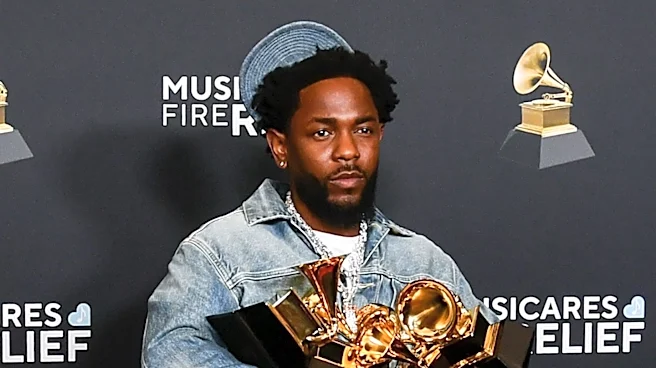
Rapper JPEGMAFIA recently commented on the evolving nature of public perception towards artists, asserting that Kendrick Lamar was the 'last person' to be 'universally liked.' In an interview for Call it a Day with Sara K on Lyrical Lemonade TV, JPEGMAFIA discussed
whether respect or likeability is more crucial for artists. He emphasized that respect is paramount, as public affection has become fleeting, with audiences often finding reasons to dislike previously admired figures. According to JPEGMAFIA, the current cultural landscape suggests that universal approval is a rarity, and artists who achieve it are quickly subjected to scrutiny. He noted that people now actively seek flaws in public figures, making sustained widespread adoration nearly impossible. This sentiment highlights a broader trend where celebrity status is increasingly accompanied by a rapid cycle of adoration and criticism.
Why It's Important?
This observation by JPEGMAFIA is significant as it reflects a notable shift in how the public engages with and perceives artists and public figures in the U.S. entertainment industry. The idea that 'no one's universally liked anymore' suggests a more polarized and critical audience, potentially influenced by the pervasive nature of social media and instant commentary. For artists, this means that building a career based solely on widespread popularity might be unsustainable, pushing them to prioritize authenticity and respect over mass appeal. This trend could lead to a more fragmented music landscape, where artists cater to niche audiences rather than striving for broad consensus. It also implies increased pressure on artists to navigate constant public scrutiny, which can impact their creative output and mental well-being. The statement underscores a cultural moment where critical engagement, even if negative, often overshadows uncritical admiration.
What's Next?
The implications of this shift could manifest in various ways within the U.S. entertainment sector. Artists may increasingly focus on cultivating dedicated fan bases that value their artistic integrity and message, rather than chasing mainstream approval. This could lead to more experimental and less commercially driven music, as artists prioritize creative freedom over universal appeal. Record labels and management might need to adapt their strategies, emphasizing long-term artistic development and community building over short-term viral success. Furthermore, the discourse around celebrity and public figures is likely to continue evolving, with a greater emphasis on resilience and authenticity in the face of inevitable criticism. This could also prompt more artists to use their platforms to address social issues, leveraging their influence to foster deeper connections with their audience beyond mere entertainment.
Beyond the Headlines
Beyond the immediate impact on the music industry, JPEGMAFIA's comments touch upon deeper societal changes regarding public discourse and collective sentiment. The erosion of 'universal likeability' could be a symptom of a more fragmented society, where shared cultural touchstones are fewer and opinions are more sharply divided. This phenomenon extends beyond entertainment, affecting politics, media, and other public spheres. The constant search for reasons 'to not like' someone reflects a broader cultural tendency towards skepticism and critique, possibly fueled by the rapid dissemination of information and misinformation online. This environment challenges traditional notions of celebrity and influence, suggesting that sustained public adoration is an artifact of a bygone era. It also raises questions about the psychological toll on individuals in the public eye, who must contend with an ever-present and often unforgiving critical gaze.