



What's Happening?
The Nashville Predators have released new renderings detailing significant upgrades planned for Bridgestone Arena and the Centennial Ice Rink. The Bridgestone Arena project, dubbed 'Smashville's Next Stage,' is set to commence in summer 2027 with a three-year
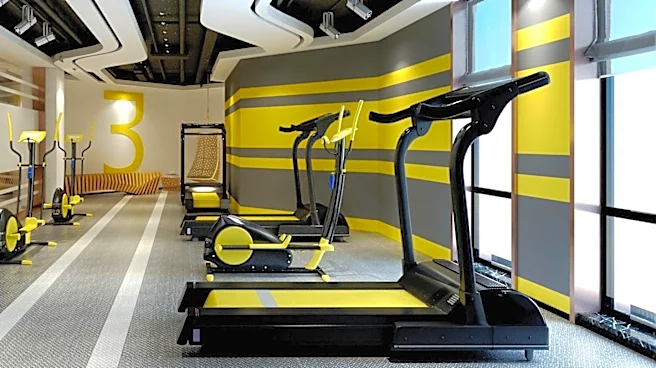
construction timeline. These enhancements will focus on the 5th Avenue and Broadway entrance, introducing additional entry and exit points, expanding retail and food options, and refreshing the spire and exterior wall designs. Concurrently, the Centennial Ice Rink will undergo renovations to its training facility, including a new rear entrance, a dedicated players' lounge, a recovery room, and a dining area. These locker room upgrades at Centennial are on a faster track, with completion anticipated by September 2027. The team's investment in the Centennial Sportsplex builds on a previous lease agreement with Metro Nashville, where the Predators committed up to $30 million in capital upgrades for operational control of the ice facilities. The newly unveiled locker room and training facility upgrades at Centennial are a separate expense covered directly by the team, beyond the initial $30 million commitment.
Why It's Important?
These extensive upgrades signify a substantial investment by the Nashville Predators in their facilities, aiming to enhance the fan experience at Bridgestone Arena and provide state-of-the-art amenities for their players at the Centennial Ice Rink. For fans, the arena improvements, including more entry points and expanded retail and food options, are expected to improve accessibility and overall enjoyment of games and events. This could lead to increased attendance and revenue for the team and the city. For the players, the upgraded training facilities at Centennial Ice Rink, featuring a players' lounge, recovery room, and dining area, are crucial for player development, well-being, and attracting top talent. Such investments can contribute to improved player performance and team success, which in turn can further boost fan engagement and the team's standing in the league. The financial commitment also underscores the team's long-term dedication to Nashville and its sports infrastructure, potentially stimulating local economic activity through construction and increased tourism.
What's Next?
The 'Smashville's Next Stage' project for Bridgestone Arena is scheduled to break ground in summer 2027, initiating a three-year construction period. Fans can anticipate a phased approach to these renovations, with efforts likely made to minimize disruption to ongoing events and the hockey season. The Centennial Ice Rink's locker room and training facility upgrades are expected to be completed by September 2027, just in time for the 2027-28 hockey season. The Nashville Predators' training camp for the 2026-27 season will include four preseason games, with two hosted at Bridgestone Arena and televised for the first time in franchise history, offering fans an early glimpse of the team's preparations. Additionally, Costco members will have access to discounted tickets for select games during the 2026-27 season through Costco Marketplace, potentially broadening the team's fan base and increasing game attendance.
Beyond the Headlines
The significant investment in both the public-facing Bridgestone Arena and the private training facilities at Centennial Ice Rink reflects a broader trend in professional sports: the continuous arms race for superior fan experiences and elite player development resources. By enhancing the arena, the Predators are not just improving a venue but also solidifying its role as a central entertainment hub in Nashville, potentially attracting more non-hockey events and further integrating the team into the city's cultural fabric. The commitment to player facilities at Centennial Ice Rink goes beyond immediate performance benefits; it signals a long-term strategy to foster a competitive edge by prioritizing athlete health, recovery, and overall well-being. This holistic approach to sports infrastructure can influence how other professional sports organizations view and invest in their own facilities, setting new benchmarks for both fan engagement and player support in the U.S. sports landscape.