





What's Happening?
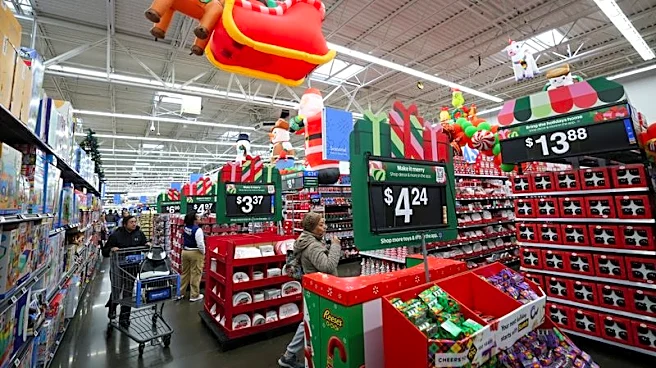
Black Friday shopping habits are evolving, with artificial intelligence increasingly influencing online purchases, yet brick-and-mortar malls in San Antonio continue to attract significant in-person crowds. While the traditional 'mob' scenes of early
morning Black Friday have diminished, a steady stream of shoppers still visits physical stores. Many consumers are now utilizing AI tools for product recommendations, gift idea generation, budget tracking, and price comparisons, allowing them to shop from home. Despite this shift, Black Friday remains the largest shopping day in the U.S. The National Retail Federation (NRF) estimates 182.7 million consumers planned to shop during Thanksgiving weekend, a slight decrease from the previous year, but anticipates overall holiday sales to exceed $1 trillion, a 4.2% increase from 2025. Online spending on Thanksgiving reached a record $7.1 billion, a 10.4% increase from last year, with Adobe Digital Insights forecasting $12.9 billion in online Black Friday sales. San Antonio malls like North Star Mall, Ingram Park Mall, and the Alamo Quarry Market reported strong turnouts, with general managers expressing optimism about continued in-person shopping for the holiday experience.
Why It's Important?
This shift highlights a dual trend in the U.S. retail landscape: the growing influence of AI in e-commerce and the enduring appeal of physical retail for experiential shopping. The increased adoption of AI by consumers for holiday shopping signifies a broader integration of technology into daily purchasing decisions, potentially reshaping how retailers engage with customers and manage inventory. For online retailers, leveraging AI for personalized recommendations and competitive pricing becomes crucial. Conversely, brick-and-mortar stores, particularly malls, are adapting by emphasizing the social and experiential aspects of shopping, such as holiday decorations, events, and the ability to physically interact with products. This dynamic creates a competitive environment where both online and offline channels must innovate to capture consumer spending. The NRF's forecast of increased overall holiday spending, despite a slight dip in shopper numbers, suggests that consumers are willing to spend more per transaction, possibly due to inflation, impacting budgeting strategies for households and pricing strategies for businesses.
What's Next?
Retailers are likely to further integrate AI into their online platforms to enhance the customer experience, offering more sophisticated personalization and deal-finding tools. This could lead to increased investment in AI development and data analytics within the retail sector. For physical stores, the focus will likely remain on creating unique in-store experiences, events, and exclusive offerings that cannot be replicated online, such as personalized customer service or community-focused activities. The extended discount periods, which now span weeks rather than just Black Friday, are expected to continue, blurring the lines of traditional holiday shopping seasons. This extended period may lead to a more spread-out consumer spending pattern rather than concentrated spikes. Additionally, as AI becomes more prevalent, there may be a growing need for consumer education on how to effectively use these tools and for retailers to ensure transparency in their AI-driven recommendations.
Beyond the Headlines
The evolving Black Friday landscape reflects deeper societal shifts in consumer behavior and technological adoption. The preference for online shopping, facilitated by AI, underscores a desire for convenience and efficiency, potentially reducing the social friction associated with crowded physical stores. However, the continued draw of malls for many shoppers highlights the enduring human need for social interaction, sensory experiences, and tradition during the holidays. This duality presents a challenge for retailers to balance technological advancement with the preservation of human-centric shopping experiences. Furthermore, the reliance on AI for purchasing decisions raises questions about data privacy, algorithmic bias in product recommendations, and the potential for consumers to become overly reliant on automated tools, potentially diminishing critical thinking in purchasing choices. The long-term impact could see a further bifurcation of retail, with highly efficient, AI-driven online platforms coexisting with experience-rich physical spaces, each catering to different consumer needs and preferences.