






What's Happening?
Advanced Micro Devices (AMD) announced a record third quarter in 2026, with total revenue reaching $13.4 billion, marking a 45% year-over-year increase. The Data Center segment was a primary driver of this growth, experiencing a 97% year-over-year surge
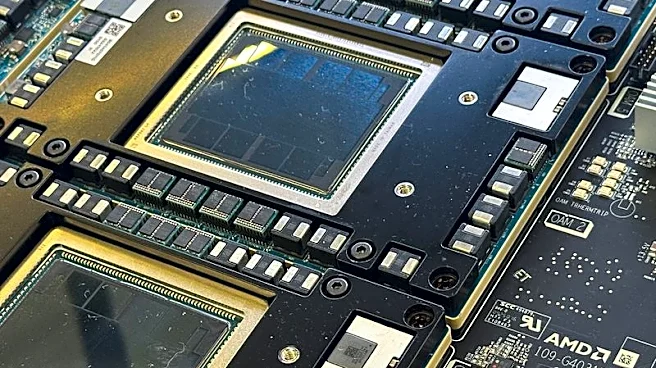
in revenue to $8.5 billion, now accounting for 64% of AMD's total revenue, up from 47% in the previous year. This significant performance was fueled by record sales of AMD Instinct GPUs and EPYC CPUs, essential components for AI infrastructure. AMD's CEO, Lisa Su, has emphasized the company's strategic shift towards prioritizing data centers, projecting a $1 trillion addressable market by 2030. The company's financial results also showed a 54% gross margin and $2.4 billion in GAAP net income. AMD's R&D spending reached $2.803 billion in the quarter, approximately 21% of its revenue, indicating substantial reinvestment into future products. The company also noted a $1.1 billion gap between GAAP and non-GAAP net income, primarily due to acquisition-related charges and stock-based compensation.
Why It's Important?
AMD's robust performance in its Data Center segment signifies a critical shift in the semiconductor industry, driven by the escalating demand for AI infrastructure. This growth positions AMD as a stronger competitor to NVIDIA, potentially leading to increased competition among chip suppliers. Such competition is crucial for cloud providers, as it can lead to more negotiating power, increased AI capacity, and a downward trend in AI service costs over time. For U.S. businesses, particularly startups and those heavily reliant on AI tools, this could translate into more affordable and accessible AI computing resources. AMD's substantial investment in R&D, amounting to approximately $30 million per day, underscores its commitment to innovation and future product development, which will likely continue to shape the technological landscape. The company's strategic partnerships with major AI players like Anthropic, Meta, Microsoft, and OpenAI further solidify its role in the evolving AI ecosystem, influencing the availability and pricing of AI computing for a wide range of industries.
What's Next?
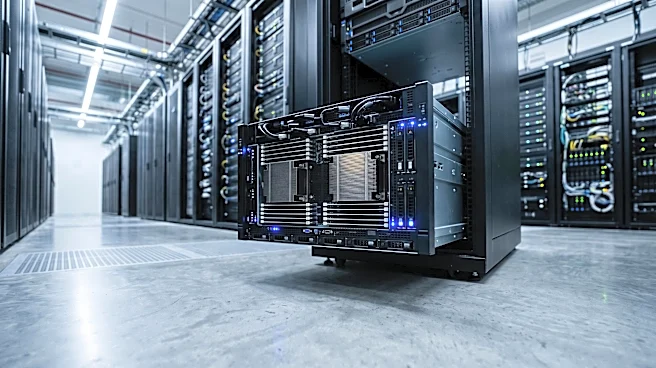
AMD anticipates continued acceleration in revenue and earnings growth for the fourth quarter of 2026, projecting total revenue of approximately $17 billion, which would mark a 66% increase year-over-year and potentially surpass Intel's quarterly revenue for the first time. The company plans to scale its Helios rack-scale AI system and introduce its upcoming 'Venice' EPYC server CPU generation. These developments are expected to further expand AI computing capacity and potentially drive down costs for AI services. The proposed acquisitions of World Labs, specializing in spatial intelligence and 3D AI, and Taalas, focused on specialized AI chip design, indicate AMD's strategic moves into emerging AI domains. The completion of these acquisitions could signal increased mainstream hardware support for 3D content generation and custom AI silicon. Furthermore, ongoing investments in consumer products, including new Ryzen models and continued support for Radeon graphics, suggest AMD will maintain a diversified product portfolio despite its strong data center focus. The industry will also be watching for improvements in AMD's software stack for GPUs, as better software could facilitate easier switching for developers and foster greater competition.
Beyond the Headlines
AMD's strategic pivot towards data centers and AI infrastructure has broader implications beyond immediate financial gains. The company's significant investment in R&D, nearly matching its operating income, highlights a long-term vision focused on innovation as a core survival strategy in the highly competitive semiconductor market. This approach could set a precedent for other tech companies to prioritize sustained research over short-term profitability. The growing competition between AMD and NVIDIA in the AI chip market could lead to a more democratized AI landscape, reducing reliance on a single dominant supplier and fostering greater innovation across the AI ecosystem. Furthermore, AMD's acquisitions in 3D AI and specialized chip design suggest a future where AI is increasingly integrated into spatial computing and custom hardware, potentially transforming industries like design, engineering, gaming, and digital twins. This shift also raises important considerations for intellectual property protection, especially for 3D assets, as they become increasingly valuable as training data for AI models. The company's financial stability, with a strong balance sheet and substantial cash reserves, enables it to make long-term strategic bets, influencing the direction of technological advancement for years to come.