

What's Happening?
A recent analysis by iSpot's agentic AI platform, SAGE, reveals that celebrity endorsements in NFL advertisements significantly boost ad likeability and consumer purchase intent. The study, conducted after three weeks of NFL action, examined top-performing
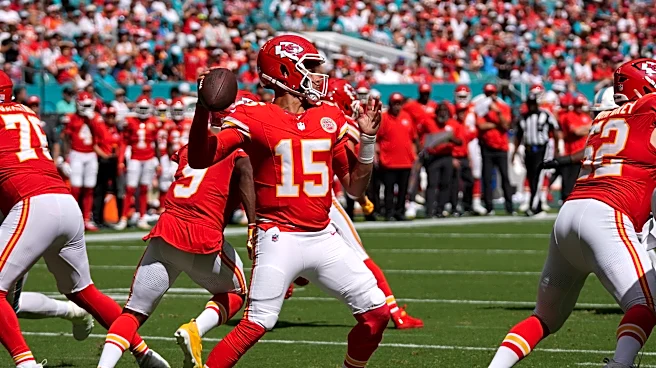
ads and the impact of celebrity talent on self-declared NFL fans. Key findings include the success of State Farm's 'For Ashley' ad featuring Kansas City Chiefs QB Patrick Mahomes and coach Andy Reid, which rated 135 points above average on likeability and showed strong purchase intent. Peyton Manning's presence in Nationwide Insurance's 'Paintin' Manning: Locker Room Mural' ad also generated high likeability and purchase intent among NFL viewers. Additionally, DraftKings' 'Sundae' ad, pairing Kevin Hart and Nick Jonas, saw a 12% higher likeability score and 63% top-2 box purchase intent among fans who specifically noted the celebrities. Bud Light's 'The Move' ad, featuring Peyton Manning and Shane Gillis, performed well, with the duo being 5% more likable than Manning alone.
Why It's Important?
The findings from iSpot's SAGE platform underscore the critical role of celebrity endorsements in maximizing the effectiveness of high-cost NFL advertising. With TV advertising costs on the rise, brands are under pressure to ensure their campaigns yield significant returns. The data clearly indicates that well-chosen celebrity partnerships can dramatically enhance an ad's appeal and directly translate into increased consumer interest and intent to purchase. This is particularly vital in the highly competitive advertising landscape surrounding major sporting events like the NFL, where audience engagement is paramount. For brands, understanding which celebrities resonate with specific demographics, such as NFL fans, allows for more targeted and impactful marketing investments. The success of these campaigns demonstrates that the right celebrity can create a powerful emotional connection with viewers, driving brand loyalty and ultimately, sales. This insight is invaluable for advertisers looking to optimize their spending and achieve measurable results in a crowded market.
What's Next?
Brands will likely continue to invest heavily in celebrity endorsements for their NFL advertising campaigns, leveraging insights from studies like iSpot's SAGE to refine their strategies. The focus will be on identifying celebrities who not only have broad appeal but also a genuine connection with the target audience, ensuring authenticity and maximizing impact. Advertisers may also explore more dynamic and interactive ways to integrate celebrities into their campaigns, moving beyond traditional endorsements to create more engaging content. The use of AI platforms for real-time analysis of ad performance will become even more prevalent, allowing brands to quickly adapt and optimize their messaging. Furthermore, the success of pairings like Manning and Gillis suggests a growing trend towards celebrity duos or ensembles that can create unique chemistry and broader appeal, potentially leading to more creative and humorous ad concepts in future NFL seasons.
Beyond the Headlines
The reliance on celebrity endorsements in NFL advertising reflects a deeper cultural phenomenon where public figures increasingly shape consumer behavior and brand identity. Beyond mere product promotion, these campaigns often tap into aspirational values, humor, and shared cultural experiences, making the ads themselves a form of entertainment. The effectiveness of these endorsements also highlights the power of parasocial relationships, where fans feel a personal connection to celebrities, making their recommendations more influential. However, this strategy also carries risks; a celebrity's public image can impact the brand, and over-saturation of endorsements can dilute their effectiveness. The data from iSpot suggests that authenticity and a strong thematic fit between the celebrity and the brand message are crucial for success. This trend also raises questions about the future of advertising in an increasingly fragmented media landscape, where traditional TV ads compete with digital content. The ability of celebrities to cut through the noise and capture attention remains a powerful, albeit evolving, tool for marketers.