









What's Happening?
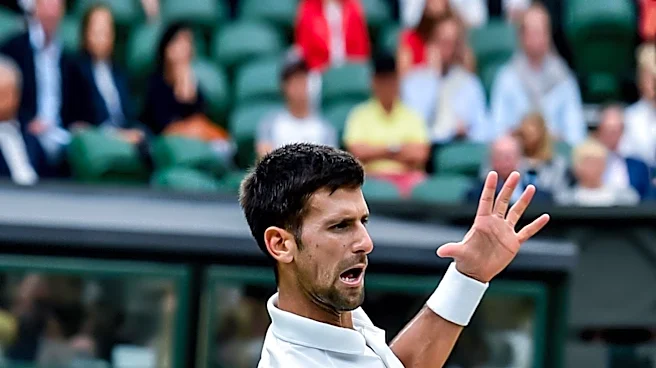
Novak Djokovic's recent victory over Felix Auger-Aliassime at Wimbledon has been described as extraordinary, showcasing his unique talent and resilience. At 39 years old, Djokovic defeated his 25-year-old opponent in a five-set match that lasted over five hours.
This performance is considered remarkable given the physical demands and the age difference between the players. Djokovic's ability to maintain a high level of play and his strategic prowess were evident throughout the match, earning him widespread admiration and respect.
Why It's Important?
Djokovic's win is a testament to his exceptional career and his ability to defy age-related expectations in sports. His performance serves as an inspiration to athletes across disciplines, demonstrating that age does not necessarily limit competitive potential. This victory also reinforces Djokovic's status as one of the greatest tennis players, as he continues to challenge records and set new benchmarks in the sport. His success at Wimbledon adds to his legacy and influences the perception of longevity and peak performance in professional tennis.
Beyond the Headlines
Djokovic's victory raises discussions about the evolving nature of athletic careers and the factors contributing to sustained success. His dedication to physical fitness, mental resilience, and strategic gameplay are key elements that have allowed him to remain competitive. This match also highlights the importance of experience and adaptability in sports, as Djokovic's ability to navigate high-pressure situations and adjust his tactics played a crucial role in his win. The broader implications of his success may influence training and development approaches for athletes aiming for long-term careers.