







What's Happening?
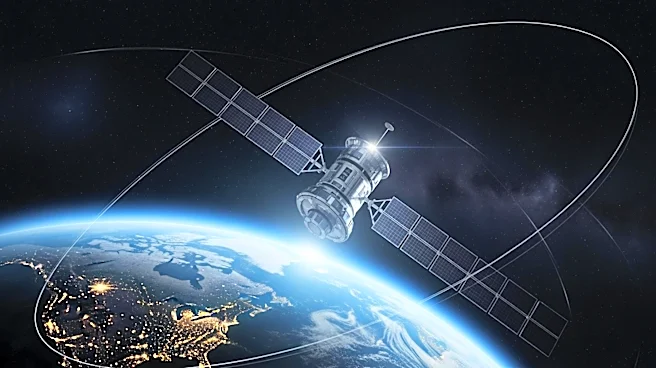
Katalyst Space has announced a $12 million funding round to develop its first geostationary orbit (GEO)-capable robotic servicing spacecraft, named NEXUS. The funding was led by Geodesic Capital with participation from Fortitude Ventures and other undisclosed
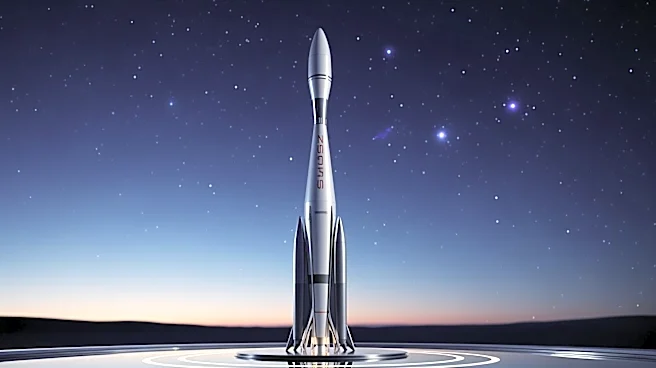
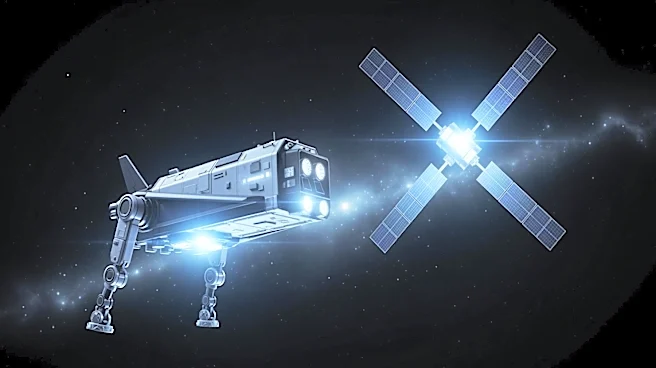
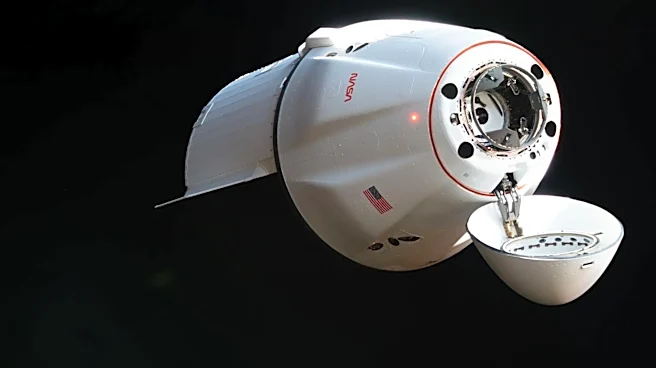
investors. The NEXUS spacecraft is scheduled for its debut mission in 2027 on an Arianespace Ariane 6 rocket. Prior to this, Katalyst will launch a mission using its LINK robotic spacecraft to service NASA’s Neil Gehrels Swift Observatory, preventing it from re-entering Earth's atmosphere. The NEXUS spacecraft will demonstrate a range of in-space servicing capabilities, including rendezvous and docking with satellites to provide life-extension services. Katalyst aims to expand the scope of in-space servicing beyond life-extension, focusing on broader applications such as orbital data centers and lunar infrastructure.
Why It's Important?
The development of NEXUS represents a significant advancement in satellite servicing technology, potentially transforming the satellite industry by extending the operational life of satellites and reducing space debris. This innovation could lead to cost savings for satellite operators and enhance the sustainability of space operations. The successful deployment of NEXUS could position Katalyst as a leader in the emerging market of in-space servicing, offering new revenue streams and business models. The ability to perform complex servicing tasks in space could also support future space exploration and infrastructure projects, contributing to the growth of the space economy.
What's Next?
Katalyst plans to launch its LINK mission later this month, followed by the NEXUS mission in 2027. The company is in the final stages of securing a contract for NEXUS to provide life-extension services to a commercial GEO satellite. Katalyst intends to deploy a fleet of NEXUS spacecraft to offer multiple services, aiming for higher profit margins. The success of these missions could attract further investment and partnerships, potentially leading to collaborations with government and commercial entities in the space sector.