







What's Happening?
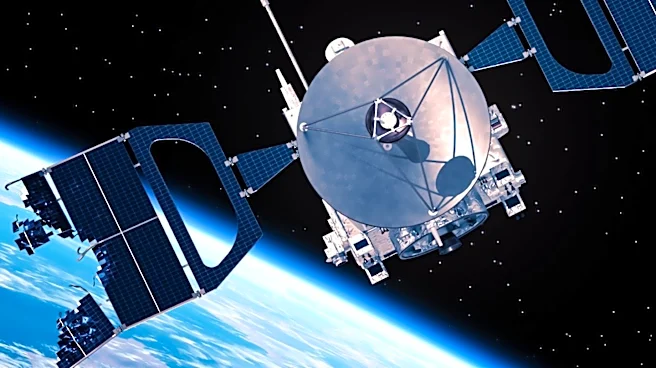
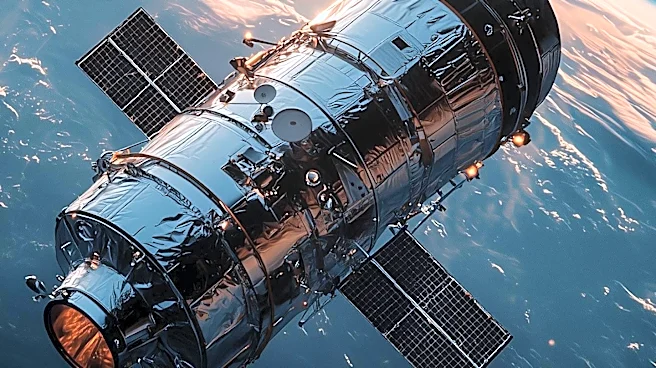
The Federal Communications Commission (FCC) has granted California-based startup Reflect Orbital the license to launch and operate Eärendil-1, a demonstration 'space mirror' satellite. Scheduled for launch later this year, the satellite will deploy a 60-foot
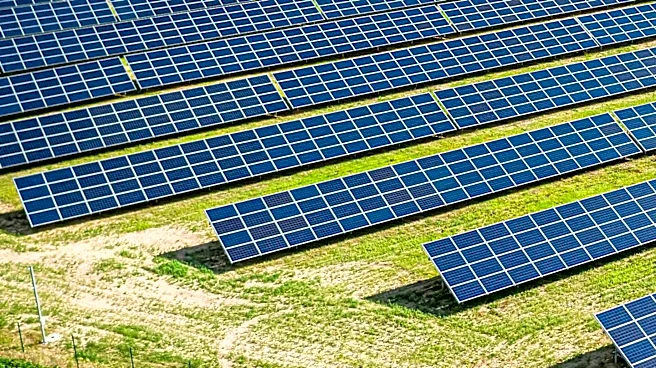
reflective thin-film mirror designed to provide 'sunlight on demand.' This technology aims to illuminate specific zones for commercial, agricultural, or emergency purposes. Reflect Orbital envisions a future constellation of up to 50,000 such mirrors by 2035. The Eärendil-1 mission will test the satellite's ability to maintain its shape and beam accuracy while in orbit. The initiative is part of a broader effort to advance green energy by enabling solar farms to generate power 24/7, even at night.
Why It's Important?
The approval of the Eärendil-1 satellite represents a significant step in the development of space-based solar power technology. By potentially providing continuous solar energy, this innovation could revolutionize energy production, reducing reliance on traditional power sources and contributing to environmental sustainability. However, the project has sparked controversy, particularly among astronomers and environmentalists. Critics argue that the satellite's beams, which are four times brighter than a full moon, could disrupt wildlife and increase light pollution, threatening astronomical research. The American Astronomical Society has expressed concerns about safety risks, including potential eye damage to stargazers and disruptions to pilots and drivers.
What's Next?
Reflect Orbital plans to conduct a highly localized, short-duration experiment with Eärendil-1 to gather data and validate its technology. If successful, this could pave the way for a new industry focused on space-based solar power. The company has integrated safety measures to minimize environmental and observational impacts, such as restricting light to target zones and avoiding sensitive areas. The FCC's conditional approval allows for a single demonstration to assess the system's capabilities. Future developments will depend on the outcomes of this initial test and the company's ability to address the concerns raised by the scientific community.
Beyond the Headlines
The deployment of space mirrors raises ethical and cultural questions about humanity's impact on the natural environment. The potential increase in global night-sky brightness could alter the way people experience the night sky, affecting cultural and scientific practices. Additionally, the project highlights the growing tension between technological advancement and environmental preservation. As space becomes increasingly commercialized, the balance between innovation and conservation will be a critical issue for policymakers and industry leaders.