
What's Happening?
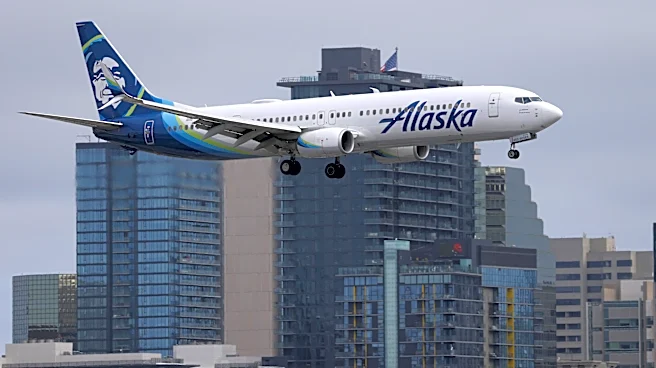
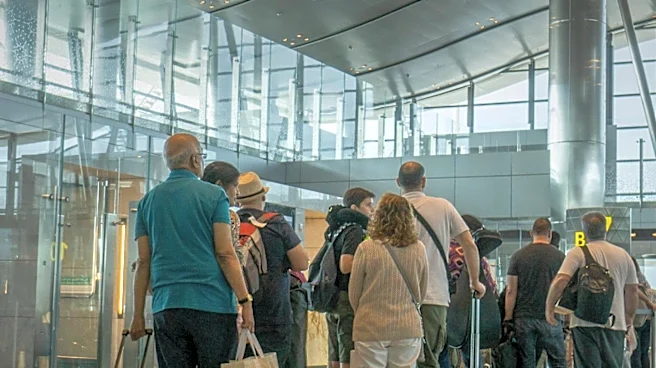
Ford Motor Co. CEO Jim Farley recently drew attention to a customer's experience involving a Ford Bronco. Following a Federal Aviation Administration (FAA) ground stop that caused widespread flight cancellations and delays, a nurse practitioner named
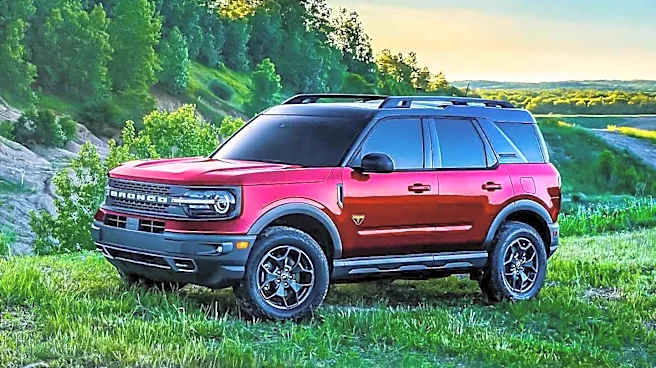
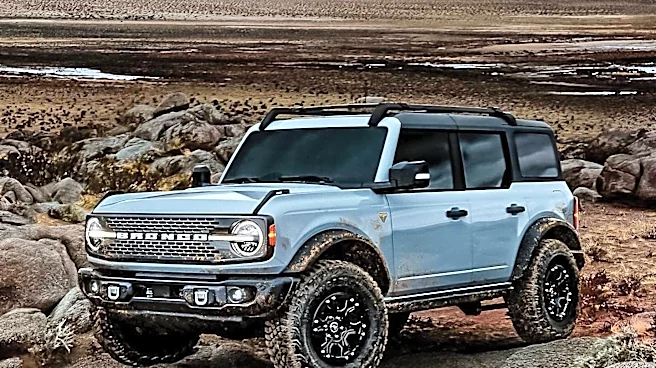
Tara Harding, stranded 1,600 miles from home in Charlotte, North Carolina, with her employees, purchased a Ford Bronco SUV. The FAA ground stop, attributed to communication issues and radar data inconsistencies, affected thousands of flights, leaving many travelers without options for return. Harding, unable to find flights, rental cars, or other transportation, bought the Bronco from a dealership and drove 1,600 miles non-stop over 27 hours to Bismarck, North Dakota, to get herself and her employees home to their children and patients. CEO Farley quoted an NBC post on social media platform X, stating, “Bronco to the rescue!” in response to the story.
Why It's Important?
This event underscores the critical role of reliable transportation, particularly in unforeseen circumstances like widespread travel disruptions. For Ford, the incident serves as an unexpected, high-profile endorsement of the Bronco's utility and reliability, potentially boosting its brand image as a dependable vehicle for challenging situations. The narrative highlights the impact of infrastructure failures, such as the FAA ground stop, on individual lives and businesses, forcing people to seek alternative solutions. It also showcases the resilience and resourcefulness of individuals in overcoming significant logistical hurdles. The story could influence consumer perceptions of vehicle capabilities beyond daily commuting, emphasizing preparedness for emergencies and long-distance travel when conventional options fail.
What's Next?
While no direct policy changes are immediately indicated from this specific event, the FAA ground stop itself may prompt further scrutiny into air traffic control system resilience and contingency planning. For Ford, the positive publicity from CEO Farley's acknowledgment could be leveraged in future marketing campaigns, reinforcing the Bronco's image as a robust and reliable vehicle. Consumers might increasingly consider vehicle versatility and emergency preparedness features when making purchasing decisions, especially in light of recent disruptions to travel infrastructure. The incident could also spark broader discussions about the robustness of national transportation systems and the need for diverse travel options.
Beyond the Headlines
Beyond the immediate narrative, this incident touches upon the broader theme of self-reliance and the unexpected ways individuals adapt to systemic failures. It highlights how personal transportation can become a critical lifeline when public or commercial transport systems falter. The story also subtly reflects on the power of social media in amplifying individual experiences and how corporate leaders can engage with these narratives to connect with their customer base. Furthermore, it implicitly raises questions about the vulnerabilities of modern infrastructure and the ripple effects of disruptions, from impacting personal commitments like childcare to professional responsibilities like patient care, demonstrating the interconnectedness of various societal functions.