





What's Happening?
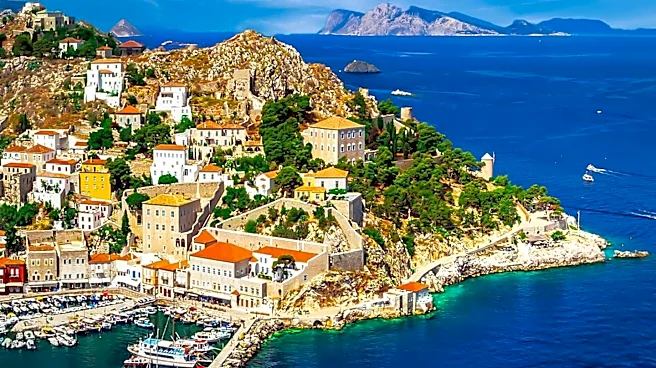
Hydra Island, located in the Saronic Gulf south of Athens, Greece, is reinforcing its long-standing ban on wheeled vehicles. This policy, which essentially prohibits cars, scooters, and bicycles, has been a defining characteristic of the island for decades,
predating modern eco-policies. The Greek government announced in May 2025 that it would more strictly enforce this ban, introducing a live register for permitted utility vehicles and a hotline for reporting illegal ones. The island's terrain, characterized by rocky landscapes and steep, narrow lanes, historically made cars impractical. Consequently, daily life and transportation on Hydra revolve around foot traffic, boats, and over 1,000 working horses, donkeys, and mules that carry goods and people. This unique approach to mobility contributes to a calm environment, free from the noise and fumes of vehicular traffic, offering a distinct experience for both residents and visitors.
Why It's Important?
The strict enforcement of Hydra's car ban highlights a unique model of urban planning and environmental preservation that prioritizes tranquility and traditional modes of transport. While not directly impacting U.S. industries or politics, this case study offers insights into alternative approaches to urban development and tourism that could be considered in certain contexts. For the tourism industry, Hydra's car-free status is a significant draw, appealing to travelers seeking a peaceful escape from modern urban stressors. The reliance on animals for transport also supports a local economy centered around these traditional services. The debate surrounding animal welfare in this context also raises ethical considerations that could influence similar initiatives elsewhere, prompting discussions on sustainable and humane practices in tourism and local economies.
What's Next?
The long-term impact of the Greek government's stricter enforcement of the car ban on Hydra remains to be seen. The effectiveness of the live register and hotline in curbing unauthorized vehicles will determine how well the island maintains its car-free status. Local authorities and residents will need to adapt to these reinforced regulations, potentially leading to further discussions on the balance between preserving tradition, managing tourism, and ensuring the welfare of working animals. The island's continued appeal as a car-free destination will depend on its ability to uphold this unique characteristic while addressing any challenges that arise from increased enforcement or evolving visitor expectations. Future developments may include enhanced infrastructure for pedestrian and animal-based transport, or further regulations to manage the environmental and social aspects of its unique mobility system.
Beyond the Headlines
Hydra's enduring car-free policy, now with stricter enforcement, represents more than just a traffic regulation; it embodies a cultural and lifestyle choice that has shaped the island's identity. This approach fosters a slower pace of life, encouraging community interaction and a deeper connection with the natural environment. The absence of vehicular noise and pollution contributes to a unique soundscape dominated by footsteps, water, and the clip-clop of hooves, offering a sensory experience distinct from most modern destinations. This model challenges conventional notions of progress and convenience, suggesting that a deliberate rejection of certain modern amenities can lead to a higher quality of life and a more sustainable form of tourism. It also underscores the power of local traditions and geographical constraints in shaping unique societal structures and environmental policies.