




What's Happening?
Vancouver Fashion Week (VFW) recently concluded its Spring/Summer 2027 showcase, marking its 25th anniversary under founder Jamal Abdourahman. The five-day event, held from October 14 to 18, featured 29 international and Canadian fashion designers. A dominant
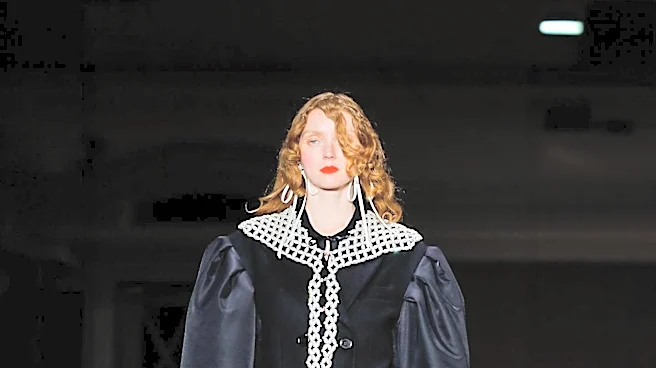
theme was the embrace of volume and sculptural effects, moving away from minimalist trends. Designers like South Korean label Bullit, led by Jeonghyeon Park and Sunjung Kim, presented technical outerwear with military-inspired panel constructions, transforming it into eveningwear. Japanese label fuku-fuku showcased origami-like volumes using heirloom kimono silks, creating spherical skirts and ballooning sleeves. The event also highlighted a strong focus on sustainability, with designers like New York's Bella Kim creating Edwardian-inspired looks from 100% reclaimed textiles, including vintage clothing and discarded sails. Additionally, a trend towards unapologetic hyper-femininity was evident, with designers like Emma Ireland utilizing strong pinks and dramatic puffed sleeves to explore modern womanhood.
Why It's Important?
Vancouver Fashion Week's emphasis on volume, sculptural designs, and reclaimed fabrics signals a significant shift in contemporary fashion, moving away from the 'quiet luxury' aesthetic. This pivot could influence broader industry trends, encouraging designers and consumers to explore more expressive and sustainable fashion choices. The focus on circular design, as demonstrated by designers repurposing textiles, highlights a growing commitment within the fashion industry to address environmental concerns. This could lead to increased demand for innovative sustainable materials and production methods, impacting textile manufacturers and supply chains. The celebration of diverse design philosophies, from military-inspired outerwear to hyper-feminine silhouettes, also reflects a broader cultural movement towards individuality and self-expression in fashion, potentially influencing retail strategies and consumer preferences across North America.
What's Next?
The trends showcased at Vancouver Fashion Week Spring/Summer 2027 are likely to influence upcoming collections from other designers and fashion houses globally. Retailers and buyers will be observing these emerging aesthetics, potentially incorporating voluminous silhouettes, sculptural elements, and sustainable pieces into their future inventories. Consumers can anticipate seeing more of these styles in mainstream fashion in the coming seasons. The continued emphasis on sustainability may also drive further innovation in textile recycling and upcycling technologies, with fashion brands seeking to integrate more eco-conscious practices into their core operations. Additionally, the diverse range of styles presented suggests a continued move towards personalized fashion, where consumers are encouraged to embrace unique and expressive garments rather than adhering to singular trends.
Beyond the Headlines
The evolution of Vancouver Fashion Week into an international hub for emerging ideas underscores a broader shift in the global fashion landscape, where regional fashion weeks are gaining prominence alongside traditional fashion capitals. This decentralization can foster greater diversity in design and provide platforms for designers with unique perspectives, such as Naya Ahdab, who designs from the perspective of a wheelchair user. The strong focus on sustainability and reclaimed fabrics also points to a deeper ethical consideration within the industry, challenging the fast-fashion model and promoting a more conscious approach to consumption. This could lead to a re-evaluation of fashion's environmental footprint and encourage consumers to invest in more durable, ethically produced garments, potentially reshaping consumer values and purchasing habits in the long term.