


What's Happening?
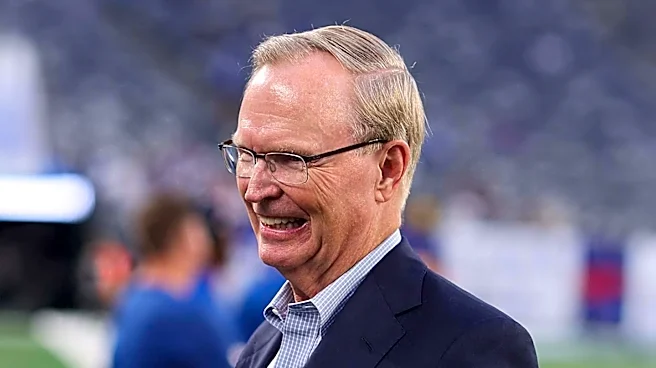
John Mara serves as the co-owner and president of the New York Giants, a role in which he directs the franchise's business operations and long-term strategic planning. His net worth is primarily linked to the valuation of the Giants, which Forbes estimates
to be between $6 billion and $7 billion. This valuation reflects the team's substantial revenue streams, including stadium deals and media rights. Mara also benefits from the broader wealth of the Mara family, which holds investments in various sports and media entities. Under his leadership, the Giants' valuation has consistently increased over the past decade, fueled by robust local television agreements, stadium-generated income, and national broadcast contracts. Mara's approach emphasizes a balance between on-field performance and financial prudence, evident in his involvement in stadium upgrade negotiations and sponsorship agreements. While he holds the ultimate authority on major business decisions, the day-to-day football operations are managed by the general manager and coaching staff.
Why It's Important?
John Mara's leadership is crucial for the New York Giants' financial stability and long-term success within the highly competitive NFL landscape. His focus on balancing financial discipline with on-field performance directly impacts the team's ability to invest in players, facilities, and fan experience. The steady growth in the Giants' valuation, driven by strategic revenue generation from media rights, stadium operations, and sponsorships, underscores the importance of effective ownership in professional sports. This financial health allows the franchise to remain a significant economic entity, contributing to local economies through employment, events, and related businesses. Furthermore, Mara's role in league-wide initiatives, such as revenue sharing and collective bargaining agreements, influences the broader economic framework of the NFL, affecting all franchises and stakeholders. His decisions on business strategy and financial management set a precedent for how major sports organizations can sustain and grow their value in a dynamic market.
What's Next?
Under John Mara's continued leadership, the New York Giants are expected to maintain their focus on strategic financial growth and operational efficiency. Future initiatives will likely include ongoing negotiations for media rights, which are a significant revenue driver for NFL teams, and potential further enhancements to MetLife Stadium to optimize fan experience and revenue generation. The franchise will also continue to pursue lucrative sponsorship agreements to bolster its financial position. Mara's emphasis on long-term value creation suggests continued investment in brand partnerships and infrastructure improvements. Decisions regarding the team's financial performance and stadium strategy will be regularly reviewed by the ownership group, ensuring alignment with NFL governance rules and transparency requirements. The balance between business objectives and football operations will remain a key aspect of the Giants' future direction, with Mara overseeing the overarching strategic vision while delegating day-to-day football matters.
Beyond the Headlines
The ownership structure of the New York Giants, deeply rooted in the Mara family legacy, highlights a unique aspect of professional sports franchises in the U.S. This long-standing family control provides a sense of stability and continuity that can be attractive to investors, sponsors, and the league itself. Unlike publicly traded companies, where short-term financial pressures might dictate decisions, a family-owned entity like the Giants, under John Mara, can prioritize long-term strategic goals and brand building. This approach can foster a strong organizational culture and a consistent vision, potentially leading to more sustainable success both on and off the field. The interplay between family legacy, business acumen, and the demands of modern professional sports presents a complex dynamic, where tradition meets contemporary financial and operational challenges. The Mara family's continued stewardship reflects a model of ownership that values enduring commitment over transient financial gains, influencing the team's identity and its relationship with its fan base.