
What's Happening?
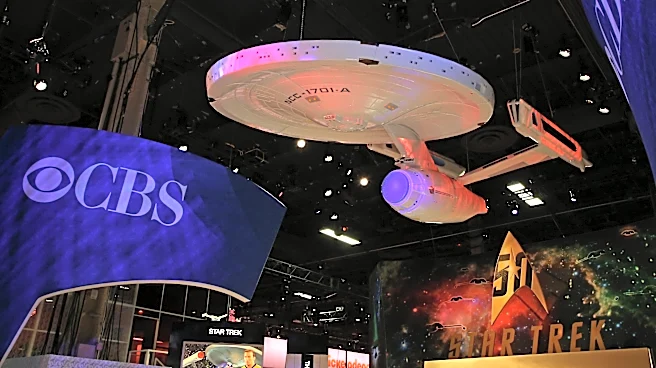
Rick Berman, a key figure in the Star Trek franchise, recently shared insights into the creation of 'Star Trek: The Next Generation' and other career milestones on the 'Dropping Names with Brent and Jonny'
podcast. Berman recounted how he initially viewed the prospect of developing a new Star Trek series with skepticism, citing three major challenges: it was science fiction during a period when the genre was not prevalent on television, it was a sequel, and it was slated for syndication rather than a network broadcast. Despite these hurdles, a six-minute discussion with his wife, Liz, led him to accept the role. This decision ultimately paved the way for successful series like 'Deep Space Nine,' 'Voyager,' and 'Enterprise,' along with several films. Berman also shared anecdotes from his early career, including working as a documentary producer for John Lennon and Yoko Ono, brief employment at Groucho Marx's house, and an encounter with Howard Hughes.
Why It's Important?
Rick Berman's account offers a rare glimpse into the foundational decisions that shaped one of the most enduring and culturally significant science fiction franchises in U.S. television history. His initial hesitation and subsequent commitment highlight the risks and vision involved in launching a major production. The success of 'Star Trek: The Next Generation' and its spin-offs not only revitalized the franchise but also demonstrated the commercial viability of syndicated science fiction, influencing subsequent programming trends. This narrative is crucial for understanding the evolution of television production and the strategic thinking behind long-running entertainment properties. The insights into casting decisions, such as Gene Roddenberry's initial reluctance to cast Patrick Stewart, underscore the often-unforeseen paths to iconic roles and the collaborative nature of creative development.
What's Next?
While the podcast primarily focuses on past events, the continued interest in Berman's experiences suggests an ongoing appreciation for the legacy of Star Trek. Such discussions often fuel fan engagement and can inspire new content or retrospectives within the franchise. For the entertainment industry, these historical accounts serve as valuable case studies in franchise management, creative development, and overcoming production challenges. The detailed anecdotes about interactions with legendary figures like John Lennon, Yoko Ono, Groucho Marx, and Howard Hughes also contribute to the broader cultural narrative of Hollywood and its influential personalities, potentially leading to further biographical works or documentary projects exploring these connections.
Beyond the Headlines
Berman's story extends beyond mere production details, touching upon the human element of creative endeavors. His decision to take on a challenging project, despite initial reservations, speaks to the blend of intuition and strategic thinking required in the entertainment industry. The podcast also subtly highlights the power of individual decisions in shaping cultural phenomena. The anecdotes about working with John Lennon and Yoko Ono, and his brief time with Groucho Marx, offer a unique perspective on the intersection of different creative worlds and the serendipitous encounters that can define a career. This narrative underscores the often-unseen personal journeys behind major cultural touchstones, revealing the blend of chance, talent, and perseverance that underpins success in Hollywood.