







What's Happening?
Portland General Electric (PGE) collaborated with Daimler Trucks North America to establish a prototype truck charging station known as Electric Island. This initiative was spearheaded by Rustam Kocher, then the Charging Infrastructure Lead at Daimler Trucks North America and Chair
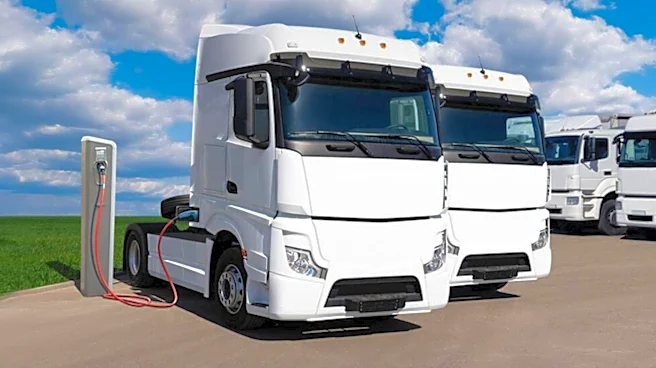
of CharIN’s Megawatt Charging System (MCS) task force. The Electric Island project aimed to address the specific charging needs of heavy-duty electric vehicles, recognizing that standard light-duty charging sites are often unsuitable due to vehicle size, weight, and power requirements. Kocher emphasizes the necessity of purpose-built charging stations for electric trucks, advocating for infrastructure that can accommodate large vehicles with appropriate ingress, egress, height clearances, and high-power charging capabilities (250 kW, 350 kW, 400 kW, or more). The Megawatt Charging System (MCS) has recently become a fully published standard, facilitating broader adoption across the industry.
Why It's Important?
The development of dedicated electric truck charging infrastructure, exemplified by the PGE-Daimler collaboration, is critical for the widespread adoption of heavy-duty electric vehicles in the U.S. and globally. Without adequate charging solutions, the transition from diesel to electric trucks will be significantly hampered, impacting logistics, supply chains, and environmental goals. This partnership highlights the essential role of utility companies like PGE in supporting the electrification of transportation. The standardization of MCS is a major step forward, enabling interoperability and reducing barriers for manufacturers and charging providers. The economic implications are substantial, as efficient charging infrastructure can lower operating costs for fleets, making electric trucks more competitive. Furthermore, the integration of battery storage systems (BESS) at charging sites, as suggested by Kocher, could enhance grid stability and enable energy arbitrage, creating new business models and revenue streams for charging operators.
What's Next?
The ongoing push for electric truck charging infrastructure will likely see more collaborations between utilities, truck manufacturers, and charging solution providers. With the MCS now a published standard, its adoption is expected to accelerate, leading to more widespread deployment of compatible charging stations. Rustam Kocher continues to advocate for the expansion of this infrastructure, emphasizing the need for sites designed specifically for heavy-duty vehicles, complete with amenities for drivers. While major U.S. truck stop operators like Love’s, Flying J, and Pilot have begun offering light-duty EV charging, they have yet to widely implement heavy-duty truck charging. However, Pilot recently opened its first Tesla Megacharger site for heavy-duty electric trucks in Ellabell, Georgia, indicating a potential shift. The market will also likely see continued innovation in battery technology and charging management systems to optimize efficiency and cost-effectiveness.
Beyond the Headlines
The transition to electric heavy-duty vehicles extends beyond mere technological upgrades; it represents a fundamental shift in the logistics and transportation industry. The need for specialized charging infrastructure underscores the unique challenges and opportunities presented by large-scale electrification. This includes rethinking urban planning for charging depots, developing new business models for energy management, and addressing the socio-economic impacts on truck drivers and related service industries. The integration of battery storage systems at charging sites could also transform them into virtual power plants, contributing to grid resilience and renewable energy integration. The success of these initiatives will depend on coordinated efforts from government, industry, and utility providers to overcome regulatory hurdles, secure funding, and ensure equitable access to charging resources, ultimately shaping the future of freight transportation and its environmental footprint.