





What's Happening?
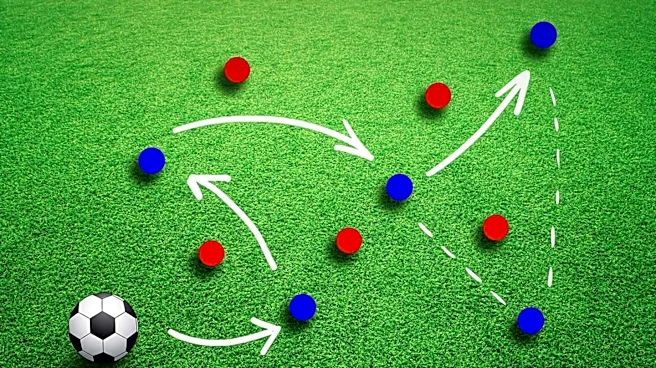
Artificial intelligence (AI) is transforming soccer practice planning for coaches, with new applications like Saideline and CoachFrank offering advanced session builders. These AI tools allow coaches to describe specific training objectives, such as a phase
of play, a principle, player count, and space, and the AI then generates a tailored practice session. Saideline, for example, provides 'Perfect Match,' 'Close Match,' or 'Modified' badges for game forms and includes a squad feature to assign players and build teams, even for uneven groups. Plans can be exported as PDFs. CoachFrank, a free mobile app, generates session plans in under a minute based on age, group size, duration, difficulty, and focus. These AI session builders contrast with traditional drill libraries and visual session design tools, offering a more dynamic and customized approach to training. Other platforms like Coachbetter and The Coaching Manual provide extensive libraries of drills and educational content, while Sport Session Planner focuses on animated 3D session design.
Why It's Important?
The emergence of AI-powered soccer practice planning apps is significant for U.S. youth sports and professional coaching. These tools democratize access to high-quality training methodologies, allowing coaches at all levels to create sophisticated and effective practice sessions without extensive prior experience or time-consuming manual planning. For youth soccer, this means improved player development, as coaches can implement more targeted and age-appropriate drills. For professional teams, AI can optimize training efficiency and help prepare for specific tactical scenarios. The ability to quickly generate customized plans addresses a major pain point for coaches: time constraints. By streamlining the planning process, coaches can dedicate more time to direct instruction and player interaction, potentially leading to better performance and reduced injury rates. This technological advancement could elevate the overall standard of soccer coaching and player development across the U.S.
What's Next?
The trend of AI integration in sports coaching is likely to continue, with further advancements in personalization and real-time adaptation. Future iterations of these apps may incorporate more sophisticated analytics, such as player performance data and biometric feedback, to refine session plans even further. The development of more intuitive user interfaces and broader language support will make these tools accessible to a wider range of coaches globally. As AI models become more advanced, they could potentially offer in-game tactical suggestions or analyze player movements to identify areas for improvement. The competitive landscape among these apps will drive innovation, leading to more comprehensive features that combine session building with team management, communication, and educational resources. Clubs and coaching organizations may increasingly adopt these technologies to standardize training methodologies and enhance coach education programs.
Beyond the Headlines
The application of AI in soccer practice planning extends beyond mere convenience; it represents a fundamental shift in how sports knowledge is disseminated and applied. By codifying coaching principles and tactical strategies into algorithms, AI tools can potentially democratize elite coaching insights, making them available to grassroots coaches. This raises interesting questions about the role of human intuition and experience in coaching versus data-driven approaches. While AI can optimize drills for specific outcomes, the human element of motivation, psychological support, and adapting to unforeseen circumstances remains crucial. The 'Perfect Match' concept, as applied to game forms, also highlights the increasing precision with which training can be tailored to individual and team needs. This technological evolution could lead to a new generation of athletes who are developed through highly personalized and scientifically optimized training regimens, potentially impacting the future of athletic performance and talent identification.