







What's Happening?
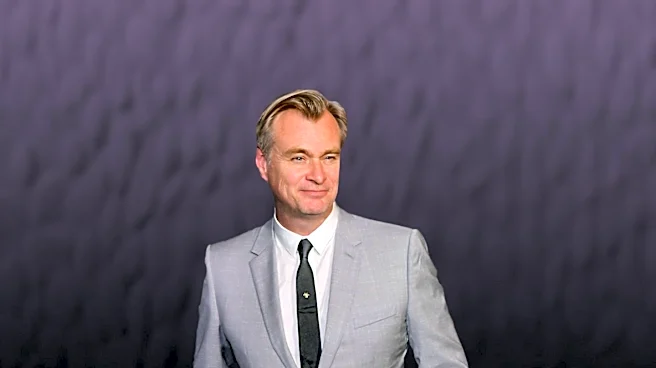
Christopher Nolan, renowned director of films such as 'Interstellar' and 'Tenet', has advised filmmakers in the mainstream movie industry to embrace risk-taking to achieve success. In an interview with The New York Times, Nolan emphasized that playing
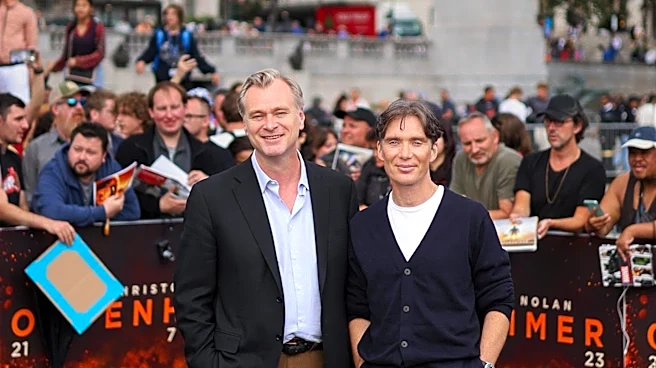
it safe is the biggest risk in filmmaking, as audiences are constantly seeking new and innovative content. He highlighted the success of his film 'Oppenheimer', which grossed nearly $1 billion despite its unconventional narrative structure and lengthy runtime, as evidence that audiences appreciate films that offer something different. Nolan's comments come as he prepares for the release of his upcoming film 'The Odyssey', an adaptation of Homer's epic, set to premiere in July 2026.
Why It's Important?
Nolan's perspective underscores a significant challenge in the film industry: balancing commercial viability with creative innovation. His remarks suggest that filmmakers who prioritize originality and risk-taking may be better positioned to capture audience interest and achieve box office success. This approach could influence industry trends, encouraging studios to support more diverse and experimental projects. For filmmakers, Nolan's advice highlights the potential rewards of pushing creative boundaries, while for audiences, it promises a more varied and engaging cinematic experience. The success of films like 'Oppenheimer' demonstrates that audiences are willing to embrace complex narratives, potentially leading to a shift in how mainstream films are produced and marketed.
What's Next?
As Nolan's 'The Odyssey' approaches its release, the film industry will be watching closely to see if it replicates the success of 'Oppenheimer'. The outcome could further validate Nolan's call for risk-taking in filmmaking. If 'The Odyssey' performs well, it may encourage other filmmakers and studios to pursue more ambitious projects. Additionally, the film's reception could influence future industry practices, potentially leading to a greater emphasis on originality and innovation in mainstream cinema. Stakeholders, including producers and financiers, may need to reassess their strategies to align with evolving audience preferences, potentially reshaping the landscape of mainstream filmmaking.