






What's Happening?
Congressman Steve Cohen (TN-9), a co-chairman of the Congressional Collegiate Sports Caucus, has issued a statement calling for enhanced measures to address traumatic brain injuries in professional and college football. Following recent high-profile injuries,
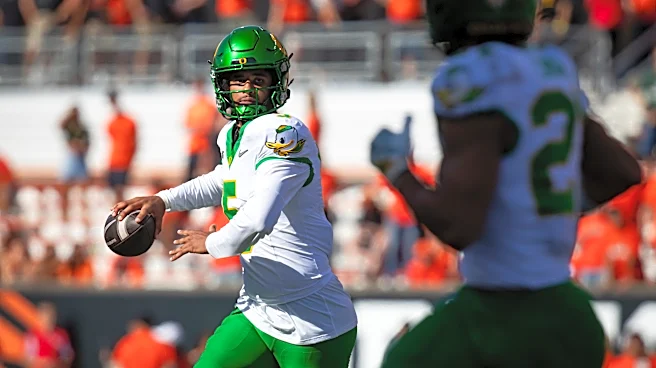
Congressman Cohen emphasized that both professional and collegiate football organizations have been aware of the risks associated with traumatic brain injuries for decades. He specifically advocated for increased penalties for players who deliver hits to the head, citing the season-ending concussion sustained by Dante Moore as an example. Congressman Cohen highlighted a 'cultural insensitivity' that needs to be rectified and referenced his previous engagement with NFL Commissioner Roger Goodell on this issue during a 2009 Judiciary Committee hearing. He also pointed to a recent New York Times article as evidence that more work is required in this area.
Why It's Important?
This call to action from Congressman Cohen underscores the ongoing national concern regarding player safety in American football, a sport with significant cultural and economic impact. The emphasis on increased penalties for head-related hits could lead to stricter rule enforcement and potentially alter player behavior, aiming to reduce the incidence of concussions and long-term neurological damage. For professional and collegiate sports organizations, this renewed pressure from a congressional leader could necessitate a re-evaluation of their safety protocols, training methods, and disciplinary actions. The potential for a follow-up Judiciary Committee hearing and the creation of a select committee to investigate the issue signals a possible legislative push for federal oversight or mandates, which could have far-reaching implications for the governance and financial models of football leagues and athletic programs across the U.S. The health and well-being of athletes, particularly young college players, are at the forefront of this discussion, impacting their future quality of life and potentially leading to significant legal and financial liabilities for institutions that fail to adequately protect them.
What's Next?
Congressman Cohen has urged the Judiciary Committee to convene a follow-up hearing on football head injuries after the upcoming elections. He also called upon the next Congress to establish a select committee specifically tasked with investigating this issue. These actions suggest a potential for continued congressional scrutiny and legislative efforts aimed at improving player safety in football. Professional and college football programs may face increased pressure to implement more stringent safety measures, revise their concussion protocols, and potentially adjust their rules regarding player conduct to avoid head contact. The outcome of these potential hearings and investigations could lead to new regulations, funding for research into brain injuries, or even changes in how the sport is played and managed at various levels across the United States.
Beyond the Headlines
The ongoing debate surrounding traumatic brain injuries in football extends beyond immediate player safety to touch upon broader ethical and societal considerations. The 'cultural insensitivity' mentioned by Congressman Cohen highlights a deeper issue within sports culture, where the pursuit of victory may sometimes overshadow player welfare. This situation raises questions about the responsibility of sports organizations to protect their athletes, especially given the known long-term health consequences of repeated head trauma, such as chronic traumatic encephalopathy (CTE). The potential for federal intervention through congressional hearings and select committees could set a precedent for government oversight in professional and collegiate sports, challenging the traditional autonomy of these organizations. Furthermore, the financial implications are substantial, encompassing potential lawsuits from former players, increased insurance costs, and the need for significant investment in research and preventative measures. This issue also influences public perception and parental decisions regarding youth participation in contact sports, potentially shaping the future landscape of American athletics.