





What's Happening?
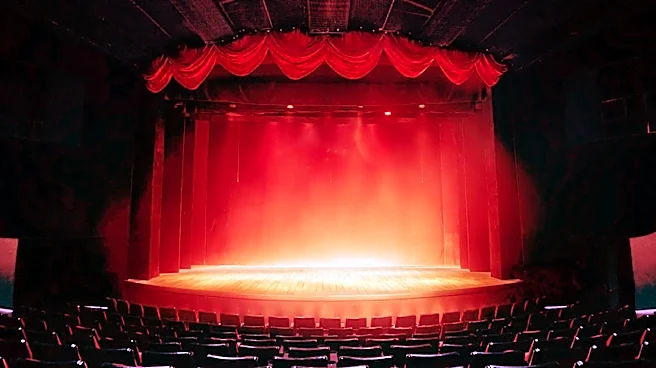
Theatrical scenic design is undergoing a transformation due to technological advancements, allowing designers to bring previously impossible concepts to life on stage. Tony Award-winning scenic designer Rachel Hauck, along with her colleagues John Lee
Beatty and Dane Laffrey, are leveraging these innovations to enhance their creative processes. Hauck, known for her work on 'Hadestown,' is currently designing for 'Galileo,' a rock bio-musical set in Renaissance-era Italy. Her design features a giant colonnade made of clear plexiglass and exposed steel, creating an illusion of solidity and transparency. This is part of a broader trend where technology is not only expanding the possibilities of what can be created on stage but also altering how designers collaborate and manage costs.
Why It's Important?
The integration of technology in scenic design is significant as it democratizes creativity, allowing designers to push the boundaries of their imagination. This shift is crucial for the theater industry, which constantly seeks to captivate audiences with innovative and immersive experiences. By making complex designs feasible and cost-effective, technology enables productions to be more visually compelling, potentially attracting larger audiences and increasing revenue. Moreover, the collaborative nature of these advancements fosters a more dynamic and efficient creative process, benefiting both designers and production teams.
What's Next?
As technology continues to evolve, its impact on other aspects of theater production, such as sound, lighting, and costume design, is expected to grow. Future articles in this series will explore these areas, highlighting how technological developments are reshaping the entire theatrical landscape. Designers and production teams will likely continue to experiment with new tools and techniques, further enhancing the audience's experience and setting new standards for theatrical productions.