







What's Happening?
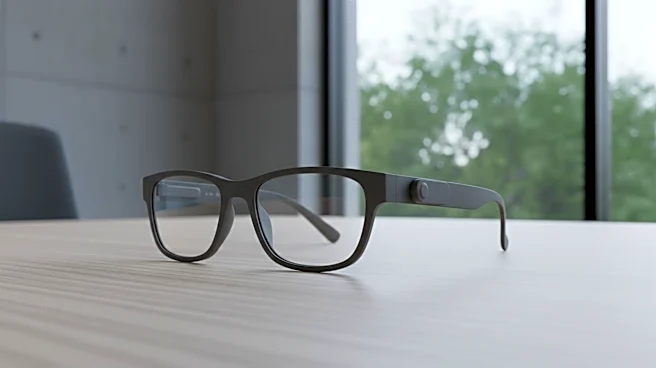
Solos, a company specializing in smart glasses, has announced the release of two new models: the audio-only AirGo A6 and the camera-enabled AirGo V2. The AirGo V2, priced at $299, offers features such as photo and video capture, music playback, and interaction
with an AI assistant. To address privacy concerns, Solos has introduced a Privacy Kit for the AirGo V2, which includes clip-on accessories that block the camera, allowing users to switch to audio-only mode. This kit, which also includes a polarized lens, is available for $79. The introduction of these privacy features comes as Solos aims to compete with Meta, a dominant player in the smart glasses market. Meta's products have faced criticism for privacy issues, prompting Solos to emphasize privacy in its offerings.
Why It's Important?
The introduction of privacy-focused features in Solos' smart glasses highlights the growing consumer demand for privacy in wearable technology. As privacy concerns continue to rise, companies like Solos are positioning themselves to capture a segment of the market that is wary of camera-enabled devices. This move could influence other tech companies to prioritize privacy in their product designs. Additionally, the competition between Solos and Meta underscores the dynamic nature of the smart glasses market, where innovation and consumer trust are key factors. The emphasis on privacy could lead to broader industry changes, encouraging more companies to develop products that balance functionality with user privacy.
What's Next?
As Solos continues to market its privacy-focused smart glasses, it may influence other companies to adopt similar strategies. The response from consumers and competitors will be crucial in determining the success of Solos' new products. If the privacy features resonate with consumers, it could lead to increased sales and market share for Solos. Meanwhile, Meta and other competitors may need to reassess their product offerings to address privacy concerns. The evolving landscape of smart glasses technology suggests that future developments will likely focus on enhancing user privacy and security.