


What's Happening?
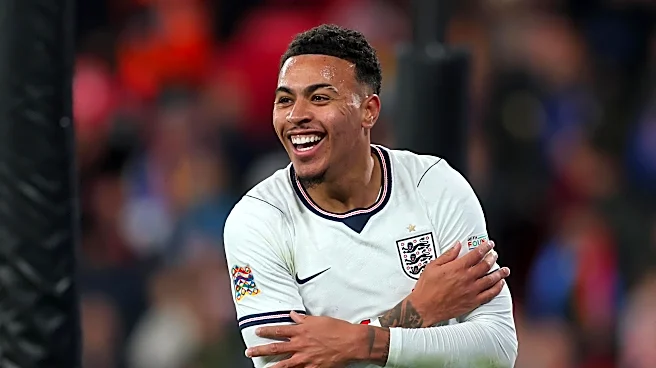
Morgan Rogers, a Chelsea teammate, has publicly defended Cole Palmer's dedication to playing for the England national team. Rogers dismissed suggestions that Palmer is unwilling to represent his country as 'a lie' and 'nonsense.' Palmer was excluded from
England's World Cup squad this year due to a persistent groin injury that impacted his performance. Although he was later called up by coach Thomas Tuchel for Nations League matches in September and October, he had to withdraw due to a recurrence of the injury. Tuchel subsequently omitted Palmer from the squad for the current month's games, stating that the 24-year-old 'misses too many opportunities.' Rogers emphasized that Palmer desires to play for England and wants to be at his best, but must also manage his body for a long-term career. Tuchel acknowledged Rogers' defense of his teammate, calling it 'totally fine.'
Why It's Important?
This situation highlights the ongoing tension between player welfare, club commitments, and national team aspirations in professional sports. For the England national team, the absence of a talented player like Palmer, especially if due to recurring injuries, could impact squad depth and performance in crucial international competitions. For Chelsea, managing Palmer's fitness is vital to ensure his availability and peak performance for club matches, particularly given his role as a key creative and goal-contributing player. The public defense by a teammate like Rogers can influence public perception and media narratives surrounding Palmer's commitment, potentially alleviating pressure on the player. The comments from coach Tuchel also underscore the high expectations placed on players to maintain fitness and seize opportunities at the international level, reflecting the competitive nature of elite football.
What's Next?
Cole Palmer's immediate future will likely involve continued focus on injury management and rehabilitation to regain full fitness. His return to the England squad will depend on his physical condition and subsequent performance for Chelsea, as well as the discretion of coach Thomas Tuchel. The ongoing dialogue between club and national team management regarding player availability and fitness will be crucial. Palmer's ability to consistently perform without injury will determine his opportunities for international selection in upcoming fixtures, including future Nations League games and qualifiers for major tournaments. The public and media will continue to monitor his progress and his potential re-inclusion in the national team setup.
Beyond the Headlines
This incident touches upon broader issues within professional football, including the intense physical demands placed on players, the pressure to perform at both club and international levels, and the delicate balance between short-term gains and long-term career sustainability. The narrative surrounding a player's 'commitment' can often overlook the complex realities of injury and recovery, leading to unfair criticism. It also highlights the role of teammates in supporting one another against public scrutiny. The situation underscores the need for comprehensive player welfare strategies that consider both physical and mental health, ensuring that athletes can manage their careers effectively while meeting the demands of elite competition. The interplay between club and national team interests will remain a recurring theme in the sport.