





What's Happening?
Chinese battery manufacturer CATL has announced it has achieved its 2025 carbon neutrality target for its core operations, with all 20 of its battery plants now certified as carbon neutral. The company made this announcement at an event in Ningde, China,
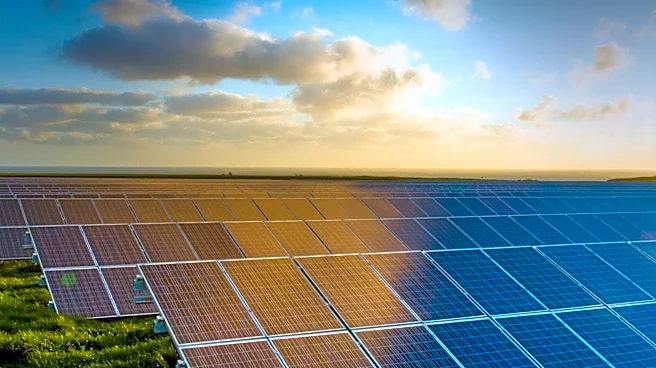
where it urged global partners to accelerate decarbonization efforts across the entire battery value chain. As part of its roadmap towards full value-chain carbon neutrality by 2035, CATL has introduced procurement guidelines requiring suppliers to provide carbon footprint data starting in 2027, and will offer more favorable terms to suppliers demonstrating better carbon emissions performance. Since commissioning its first production plant in 2012, CATL has invested in zero-carbon manufacturing, utilizing its Carbon Chain Management System, developed in 2022, to monitor and calculate emissions across its plants, production lines, and core upstream suppliers. In 2025, zero-carbon energy accounted for 100% of electricity consumption in CATL’s core operations, and energy consumption per unit of product at its battery manufacturing facilities was 28% lower than in 2022. The company also reported a 77% reduction in carbon emission intensity. Between 2023 and 2025, CATL achieved cumulative carbon emission reductions exceeding 10 million tonnes of CO2 equivalent.
Why It's Important?
CATL's achievement of its carbon neutrality target for core operations is significant for the global battery industry, particularly given its dominant position as the world's largest EV battery maker, supplying nearly 40% of global EV batteries. This move sets a precedent and exerts pressure on other manufacturers and their supply chains to adopt more sustainable practices. The company's focus on its supply chain, which accounts for over 80% of its product lifecycle emissions, highlights the critical need for collaborative decarbonization efforts across the entire value chain. By requiring carbon footprint data from suppliers and offering preferential terms for better carbon performance, CATL is effectively integrating sustainability into its procurement processes, which could drive widespread changes in manufacturing and logistics within the battery ecosystem. This initiative also underscores the growing demand for zero-carbon batteries as the world accelerates towards net-zero goals, positioning CATL as a leader in shaping global carbon standards and advancing industry-wide decarbonization.
What's Next?
CATL's next major step is to achieve full value-chain carbon neutrality by 2035. This will involve continued focus on its decarbonization roadmap, which includes material and process innovation, green logistics, and battery recycling. The company's new procurement guidelines, which mandate carbon footprint data from suppliers by 2027, will likely lead to increased transparency and accountability throughout the battery supply chain. Suppliers will need to adapt to these requirements, potentially investing in their own decarbonization efforts to remain competitive and secure favorable terms with CATL. The company's commitment to sharing its technologies and experience with industry partners suggests a collaborative approach to advancing global carbon standards. This could lead to the development of new industry benchmarks and best practices for sustainable battery production. Furthermore, as zero-carbon batteries become a necessity, other major players in the EV and energy storage sectors may follow suit, intensifying the push for sustainable manufacturing across the entire industry.
Beyond the Headlines
The deeper implications of CATL's carbon neutrality achievement extend beyond environmental benefits, touching upon economic competitiveness, technological innovation, and regulatory influence. By proactively investing in zero-carbon manufacturing and supply chain decarbonization, CATL is not only mitigating environmental risks but also building a more resilient and future-proof business model. This strategic move could enhance its market leadership by appealing to environmentally conscious consumers and governments, potentially influencing future trade policies and regulations related to battery production. The emphasis on reliable data and systematic execution for carbon neutrality, as highlighted by Jiang Li, Vice President at CATL, suggests a shift towards more rigorous and verifiable sustainability claims, moving beyond mere estimates. This could foster greater trust in green certifications and reduce instances of 'greenwashing' within the industry. Moreover, CATL's willingness to share its technologies and experience could accelerate the global transition to a low-carbon economy, demonstrating that large-scale industrial decarbonization is achievable and economically viable.