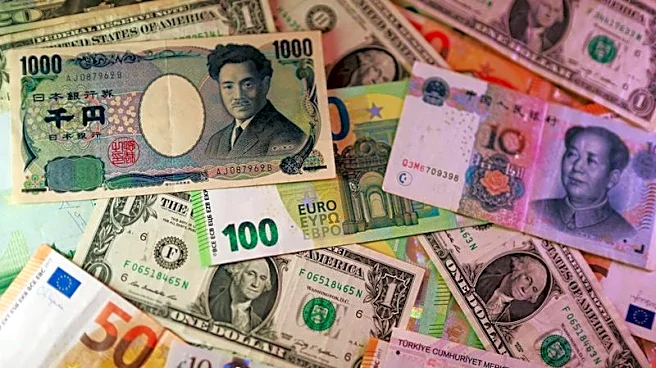







What's Happening?
Japan's efforts to stabilize the yen, with support from the U.S., have linked Japan's currency issues more directly to U.S. funding markets and global financial stability. Treasury Secretary Scott Bessent has discussed expanding a Federal Reserve facility
to help Japan raise dollars without selling Treasuries. Japan, the largest foreign holder of U.S. government debt, faces challenges as its currency interventions have only provided temporary relief. The yen's weakness is influenced by factors such as rate differentials, energy import costs, and domestic inflation, which continue to affect investor confidence.
Why It's Important?
The yen's stability is crucial for global markets due to Japan's significant holdings of U.S. Treasuries and its role as a major funding currency. A prolonged yen weakness could lead to increased Treasury sales, affecting U.S. borrowing costs and potentially leading to higher yields. This situation also impacts global trade dynamics, as a weaker yen makes U.S. goods more expensive for Japanese buyers, affecting trade balances. The interconnectedness of these economic factors highlights the importance of coordinated international financial strategies.
What's Next?
The Federal Reserve's FIMA Repo Facility could play a key role if Japan's liquid reserves diminish, allowing for continued intervention without direct Treasury sales. The facility's expansion is under consideration to accommodate the growing Treasury market. The situation requires ongoing monitoring of Japan's economic policies and their impact on global markets, with potential adjustments in international financial cooperation to ensure stability.