


What's Happening?
Gen Z's current fashion trends, heavily influenced by social media, often prioritize aesthetics that are 'flattering, clickable, and on-brand,' leading to a cycle of micro-trends and archival looks. This generation frequently revives past styles, such
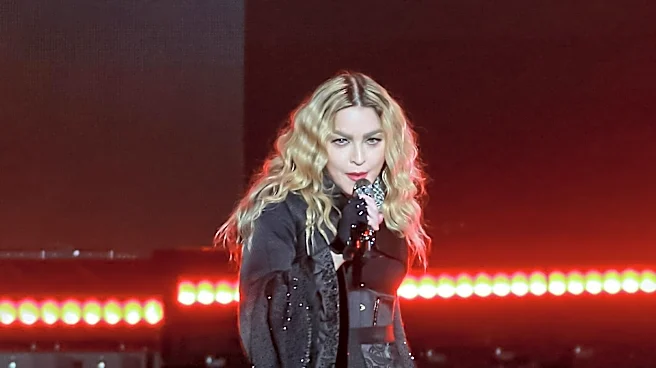
as wired headphones, hair rollers, and low-rise jeans, driven more by nostalgia and a desire to showcase broad cultural knowledge rather than artistic expression or social commentary. The article contrasts this with Madonna's career, highlighting her continuous reinvention and use of appearance to convey deeper messages about race, religion, sexuality, and injustice. Madonna's transformations, from 'Like a Virgin' to 'Erotica' and 'Ray of Light,' were not merely about looking different but about challenging expectations and amplifying her voice, making her beauty choices a language rather than a superficial endpoint. This approach allowed her to consistently push boundaries and redefine what a pop star could represent.
Why It's Important?
This trend among Gen Z signifies a shift in how fashion and personal expression are perceived and utilized. The emphasis on 'clickable' and 'on-brand' aesthetics, driven by social media algorithms, can stifle genuine artistic experimentation and deeper meaning in fashion. While nostalgia can be a powerful cultural force, its dominance in fashion choices may limit innovation and the use of clothing as a medium for social or personal commentary. The comparison to Madonna underscores the potential for fashion to be a tool for activism and self-discovery, rather than just a means to accumulate likes or follow trends. This could have long-term implications for the fashion industry, potentially leading to a faster consumption cycle of fleeting trends and a reduced focus on designs with enduring cultural significance or a strong narrative.
What's Next?
The ongoing influence of social media platforms will likely continue to shape Gen Z's fashion consumption patterns, potentially perpetuating the cycle of micro-trends and nostalgic revivals. However, there's also an opportunity for a counter-movement where individuals and designers might seek to emulate Madonna's approach, using fashion as a more profound form of self-expression and social commentary. This could lead to a greater appreciation for unique, meaningful styles that transcend fleeting trends. The fashion industry may need to adapt by fostering creativity and individuality, moving beyond purely commercial or 'on-brand' considerations to cater to a desire for more authentic and impactful sartorial statements. Educational initiatives could also encourage younger generations to explore the historical and cultural significance of fashion beyond its immediate aesthetic appeal.
Beyond the Headlines
The phenomenon of Gen Z's fashion choices, driven by social media and nostalgia, reflects broader societal shifts in identity formation and cultural consumption. In an era of constant digital curation, the pressure to maintain a 'brand' or 'aesthetic' can inadvertently limit genuine self-expression. This raises questions about the authenticity of online identities versus real-world personas and how individuals navigate these spaces. The contrast with Madonna's career highlights the power of appearance as a form of communication and activism, suggesting that fashion can be a potent tool for challenging norms and sparking dialogue. The current trend, while seemingly innocuous, could contribute to a more superficial engagement with culture, where depth and meaning are sacrificed for immediate visual appeal and social validation. This also has ethical implications regarding fast fashion and overconsumption, as rapid trend cycles encourage disposable clothing.