






What's Happening?
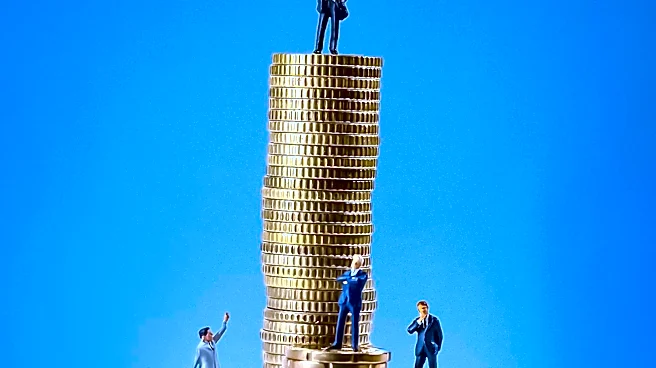
A UBS report reveals that global personal wealth grew by 11% last year, yet this growth was unevenly distributed. The top 1.5% of the population now holds nearly 50% of the world's wealth. In the U.S., average wealth per adult increased by 10% from 2020
to 2025, while median wealth fell by 20%. The U.S. ranks second globally in average wealth per adult but 28th in median wealth, highlighting significant wealth inequality. The report attributes these disparities to strong financial markets benefiting the wealthy and ongoing economic trends like inflation disproportionately affecting lower-income households.
Why It's Important?
The widening wealth gap in the U.S. has profound implications for economic stability and social cohesion. As wealth becomes concentrated among a small elite, economic disparities can lead to social unrest and political polarization. The report underscores the challenges faced by lower-income households, exacerbated by inflation and high living costs. This economic divide may fuel public backlash against the wealthy and influence policy debates on taxation and wealth redistribution. Additionally, technological advancements like artificial intelligence could further impact wealth distribution, necessitating proactive measures to ensure equitable economic growth.
Beyond the Headlines
The report suggests that while technological innovations such as AI and nuclear fusion could reshape the economic landscape, they also pose risks of exacerbating existing inequalities. Policymakers and business leaders must consider the ethical and social implications of these technologies to prevent further disparities. The shrinking percentage of people in the lowest wealth bracket globally offers a glimmer of hope, indicating potential for upward mobility if economic policies are effectively implemented.