







What's Happening?
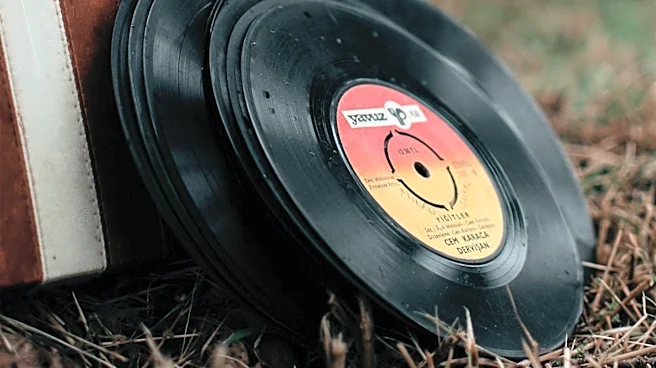
Mosaic Records has released a new six-CD box set titled 'The Complete Louis Armstrong in New York 1924-1925.' This collection features 134 recorded sides made by Louis Armstrong between October 7, 1924, and November 2, 1925, during his pivotal period
in New York. Armstrong joined Fletcher Henderson's orchestra in 1924, a move that significantly impacted the jazz scene. The set includes newly remastered audio, with restoration expert Doug Benson addressing challenges in achieving aural consistency across various recording sessions, which ranged from well-recorded Columbia sessions to inferior dime-store recordings, and a mix of electrical and acoustical sides. The collection is housed in a 12-by-12 box and includes a glossy 108-page hardcover book. This release follows Mosaic Records' history of issuing comprehensive Armstrong collections, many of which are now out of print due to their limited-edition nature. This new set has a limited run of 2,500 copies.
Why It's Important?
This release is significant for jazz historians and enthusiasts as it chronicles a crucial period in Louis Armstrong's career, where he emerged as a dominant innovative force in jazz. His time with Fletcher Henderson's band in New York allowed him to introduce a looser, freer approach to music, influencing his bandmates and the arrangements by Don Redman. The collection highlights Armstrong's unique tone and impulsive approach, evident in his solos, which often bloomed into complete choruses. It also captures his collaborations with blues singers like Bessie Smith and Ma Rainey, showcasing his versatility and impact on various musical forms. The meticulous remastering efforts aim to provide the best possible listening experience, allowing modern audiences to appreciate the nuances of these historic recordings. The limited edition nature of the release underscores its collectible value and importance to dedicated jazz aficionados.
What's Next?
The limited run of 2,500 copies suggests that this box set will become a sought-after item for collectors and jazz scholars. As with previous Mosaic Records' Armstrong releases, it is likely to go out of print, increasing its rarity and value over time. The release may also spur renewed interest in Armstrong's early career and his contributions to the development of jazz in New York. Music critics and jazz publications are expected to review the set, further solidifying its place in jazz discography. Educational institutions and music archives may acquire copies for study and preservation, ensuring its availability for future generations of researchers and students of jazz history.
Beyond the Headlines
This collection offers more than just music; it provides a sonic window into the cultural and artistic ferment of 1920s New York, a period often referred to as the Jazz Age. Armstrong's arrival in the city marked a turning point, as his innovative style began to shape the sound of jazz, moving it beyond its earlier forms. The set implicitly highlights the evolution of recording technology during that era, with the inclusion of both acoustical and early electrical recordings, showcasing the technical challenges and advancements of the time. Furthermore, it underscores the role of record labels like Mosaic in preserving and presenting historical musical legacies with scholarly rigor, ensuring that foundational works of American music remain accessible and appreciated. The detailed liner notes and historical context provided in the accompanying book contribute to a deeper understanding of the social and musical landscape in which Armstrong thrived.