


What's Happening?
WWE President Nick Khan has named Oba Femi as the company's 'next big thing,' while asserting that there will not be another 'John Cena.' Khan, speaking on 'The Deal' at the Bloomberg Screentime conference, detailed WWE's evolving talent recruitment strategy.
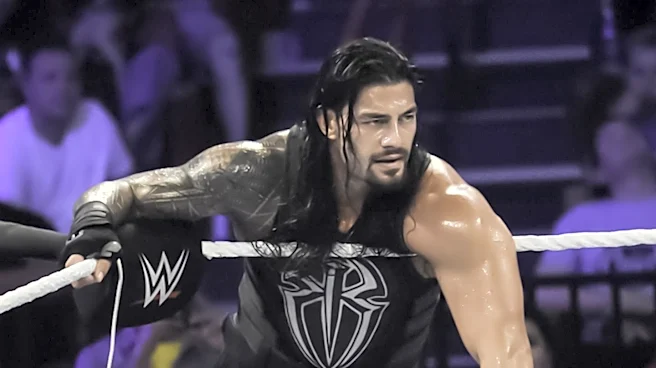
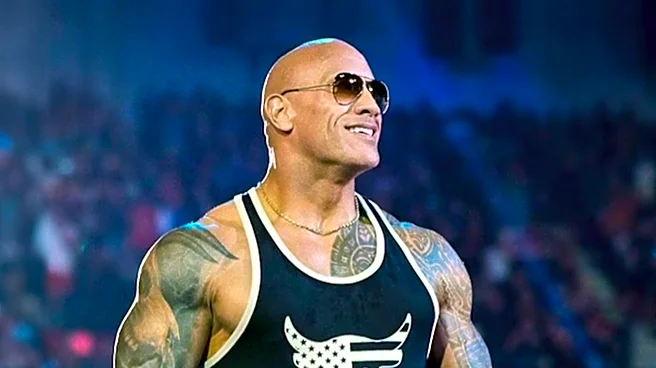
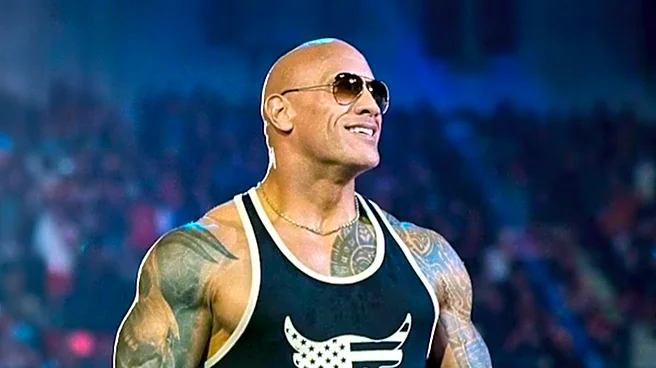
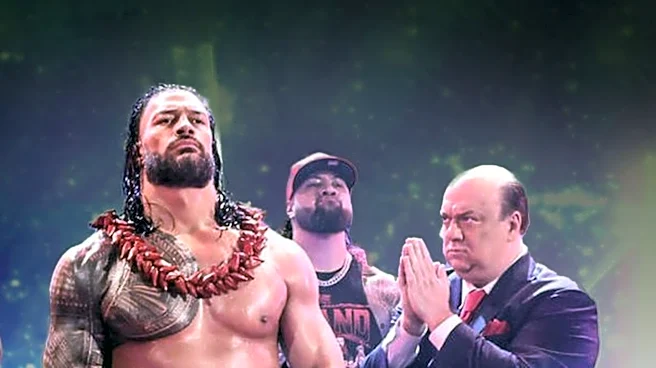
He explained that the company no longer seeks to replicate past stars like John Cena, believing each major talent is unique. Instead, WWE has shifted its focus over the past six years, moving beyond primarily scouting independent wrestling circuits to actively recruiting college athletes. This new approach targets individuals with transferable athletic skills, even if they haven't succeeded in traditional professional sports like the NFL. Khan cited examples of current and past WWE stars, such as Roman Reigns (Georgia Tech football), Big E (University of Iowa football), and The Rock (University of Miami football), who transitioned from collegiate sports. The company now actively encourages athletes from various disciplines, including track and field, to consider a career in WWE if their initial athletic aspirations don't materialize.
Why It's Important?
This strategic shift in WWE's talent acquisition has significant implications for the professional wrestling industry and sports entertainment in the U.S. By prioritizing college athletes, WWE is tapping into a broader and more diverse pool of talent, potentially leading to a new generation of performers with varied athletic backgrounds and skill sets. This move could enhance the in-ring product by introducing different styles and physical capabilities, moving away from a singular mold of a 'superstar.' For college athletes, it opens a new, viable career path in entertainment, offering an alternative to traditional professional sports leagues. The emphasis on unique, rather than replicated, talent suggests a move towards fostering individuality and diverse personas, which could resonate with a wider audience and prevent the product from becoming stale. This strategy also highlights WWE's proactive approach to talent development, ensuring a continuous pipeline of performers who can maintain the company's appeal and market share in the competitive entertainment landscape.
What's Next?
WWE is expected to continue and expand its college athlete recruitment program, potentially leading to more athletes from diverse sports backgrounds joining the company's developmental system. The success of individuals like Oba Femi, who was a shot putter at the University of Alabama, will likely serve as a case study for this new strategy. This approach could see WWE scouts and legends, such as The Undertaker, making more appearances at college campuses to directly engage with athletes. The company will likely focus on developing these recruits' entertainment and performance skills, alongside their athletic abilities, to prepare them for the main roster. This could also influence how WWE markets its new stars, emphasizing their unique backgrounds and individual strengths rather than drawing comparisons to past legends. The long-term impact will be observed in the coming years as these college recruits progress through the WWE system and potentially become the next generation of headlining talent.
Beyond the Headlines
The WWE's pivot to college athlete recruitment reflects a broader trend in entertainment and sports, where organizations are increasingly looking beyond traditional talent pools to find individuals with raw athletic potential and a compelling personal story. This strategy could lead to a more globalized and diverse roster, as exemplified by Oba Femi's Nigerian background. It also underscores the evolving definition of a 'superstar' in professional wrestling, moving away from a singular archetype to embrace a wider range of personalities and physical attributes. This shift could challenge conventional notions of what makes a successful wrestler, potentially leading to more innovative storytelling and character development. Furthermore, it highlights the growing intersection between collegiate sports and professional entertainment, offering new avenues for athletes whose careers might not fit into established professional leagues but possess the charisma and athleticism for a career in sports entertainment.