
What's Happening?
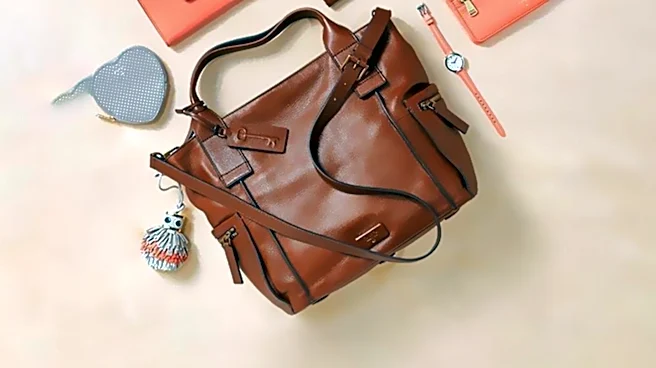
Bag charms are gaining significant traction as a fashion accessory, allowing individuals to personalize their handbags and luggage. These decorative items range from colorful beads and mini leather accessories
to nostalgic trinkets and whimsical characters. Beyond aesthetics, some bag charms offer practical utility, providing a discreet spot for small essentials. The trend is seen as a way to refresh the look of existing bags, make luggage more identifiable on carousels, and serve as a portable keepsake for travel memories. Fashion history shows similar trends, with Jane Birkin famously adorning her Hermès bag with personal items, and brands like Hermès and Fendi introducing their own popular charms in the past. Recent runway revivals at Miu Miu and Balenciaga have further propelled bag charms back into the mainstream, making them a popular item for travelers and fashion enthusiasts alike.
Why It's Important?
The resurgence of bag charms highlights a broader consumer desire for personalization and self-expression in everyday items. For the fashion industry, this trend creates a new market segment for accessories, offering opportunities for designers and retailers to innovate with diverse materials, designs, and functionalities. It also encourages consumers to extend the lifespan of their existing bags by offering an affordable way to update their look, rather than purchasing entirely new bags. From a retail perspective, bag charms are positioned as versatile gifts and impulse buys, appealing to a wide demographic. The trend also taps into the emotional value of travel and personal memories, as consumers use charms to carry sentimental items or represent past adventures, fostering a deeper connection with their accessories.
What's Next?
The popularity of bag charms is expected to continue, with potential for further diversification in design and functionality. Manufacturers may explore integrating smart technology into charms, such as tracking devices or payment capabilities, enhancing their practical appeal. We could also see increased collaboration between fashion brands and artists to create limited-edition, collectible charms, driving consumer interest and exclusivity. Retailers are likely to expand their offerings, providing a wider array of styles, from luxury to affordable options, to cater to different market segments. Additionally, the trend may influence other accessory categories, inspiring similar personalization options for items like keychains, phone cases, and even apparel, as consumers seek more unique ways to express their individuality.
Beyond the Headlines
Beyond their immediate fashion appeal, bag charms reflect a cultural shift towards valuing individuality and storytelling through personal possessions. In an increasingly standardized world, these small accessories offer a tangible way for individuals to differentiate themselves and carry symbols of their identity, experiences, and aspirations. The trend also subtly challenges fast fashion by encouraging the revitalization of existing items rather than constant replacement, promoting a more sustainable approach to personal style. Ethically, the production of these charms could raise questions about sourcing materials and labor practices, particularly as demand grows. Culturally, they serve as miniature canvases for artistic expression, reflecting current trends, pop culture references, and personal narratives, making them more than just an accessory but a form of wearable art.