




What's Happening?
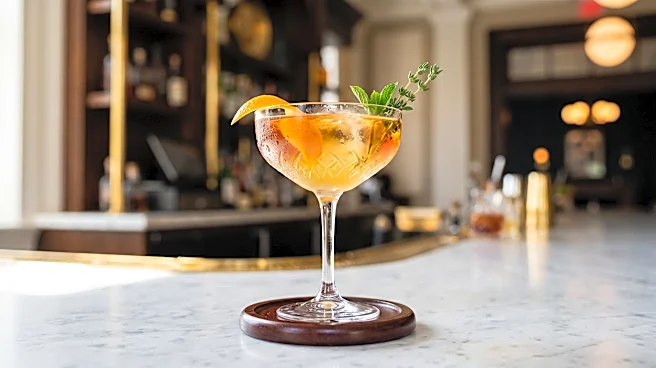
Actor Stanley Tucci is known for his preference for a stronger martini, a cocktail choice that contrasts with Julia Child's favored lighter version. Tucci's recipe, which he demonstrated for Ina Garten on her show 'Be My Guest' in 2023, involves mixing
¾ ounce of dry white vermouth with 4 ounces of Tanqueray gin. This mixture is stirred with ice until very cold and then poured into pre-chilled martini glasses. He finishes the drink with both a lemon twist and an olive. This approach emphasizes a higher gin-to-vermouth ratio, resulting in a more potent drink compared to Child's 'reverse martini,' which features a higher vermouth content, making it less alcoholic. The temperature of the drink is also highlighted as a crucial factor, with chilled glasses preventing rapid warming.
Why It's Important?
This detail about Stanley Tucci's martini preference highlights a broader trend in American culinary and mixology culture, where celebrity endorsements and personal recipes significantly influence consumer choices and trends. The discussion of specific ratios and preparation methods, such as chilling glasses, underscores a growing sophistication and appreciation for cocktail craftsmanship among the general public. For the beverage industry, celebrity-backed recipes can drive sales of specific brands of gin and vermouth, as consumers seek to replicate their favorite stars' drinks. This also reflects a cultural shift towards personalized experiences in food and drink, where individual preferences are celebrated and shared, potentially inspiring home mixologists and influencing bar menus across the U.S. The contrast with Julia Child's approach also illustrates the evolution of classic cocktail interpretations over time.
What's Next?
The continued sharing of celebrity cocktail recipes, like Stanley Tucci's martini, is likely to further popularize specific brands and preparation techniques within the U.S. beverage market. We can anticipate an ongoing trend of mixology enthusiasts and home bartenders experimenting with these celebrity-inspired variations. This could lead to increased demand for premium gins and vermouths, as well as barware designed for optimal cocktail preparation, such as specialized mixing glasses and chilling tools. Furthermore, the emphasis on specific garnishes like lemon twists and olives suggests a continued focus on the aesthetic and sensory experience of cocktail consumption. This trend may also encourage more public figures to share their culinary and mixology preferences, further shaping consumer habits and product visibility in the lifestyle and entertainment sectors.
Beyond the Headlines
Beyond the immediate appeal of a celebrity-endorsed drink, the discussion around Stanley Tucci's martini touches upon deeper cultural aspects of American social life and entertainment. The act of preparing and sharing a cocktail, particularly one with a specific and refined recipe, often symbolizes hospitality, sophistication, and a certain lifestyle. This trend can influence social gatherings, dining experiences, and even the design of home bars. The emphasis on details like temperature and specific garnishes reflects a broader cultural movement towards artisanal quality and mindful consumption, where the process and presentation are as valued as the final product. This also subtly reinforces the idea that personal taste, even in something as seemingly simple as a drink, can be a form of self-expression and a point of connection in social interactions.