




What's Happening?
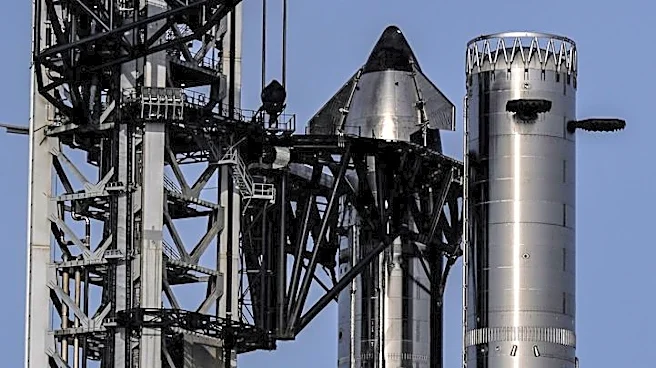
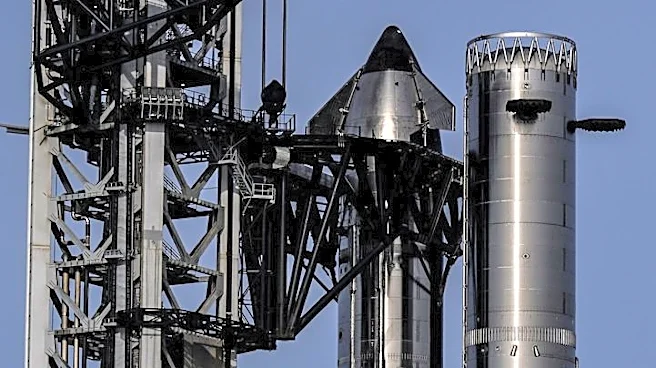
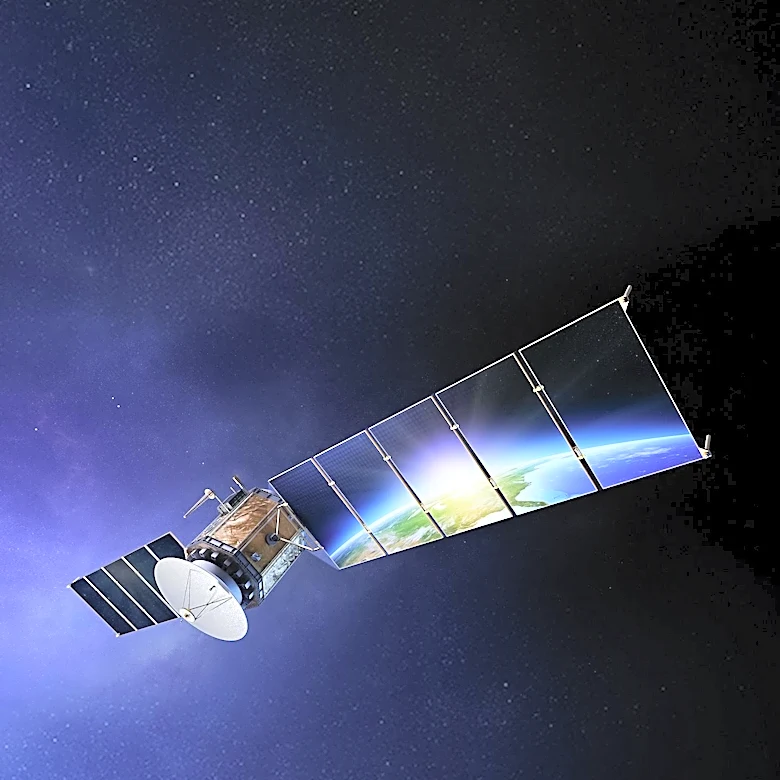
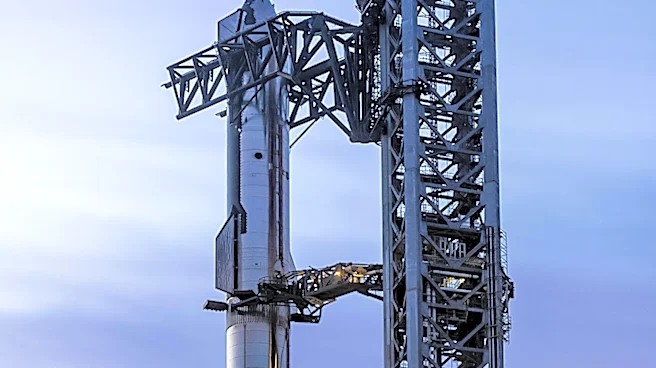
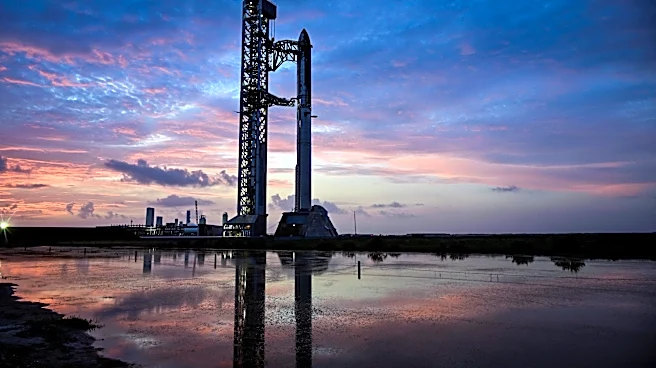
SpaceX successfully launched its Starship rocket on July 24, 2026, marking the 13th test flight of the vehicle. The mission involved deploying 20 next-generation Starlink V3 satellites. The launch took place from SpaceX's base in Texas, and the spacecraft
completed a journey that ended with a controlled splashdown in the Indian Ocean. Despite a partial engine failure during the booster’s return, which resulted in it crashing into the Gulf of Mexico, the mission was deemed successful as the satellites were deployed as planned. The Starlink satellites, part of SpaceX's extensive satellite constellation, communicated with existing satellites via lasers, enhancing the network's capabilities. The mission also included experiments on the spacecraft's heat shield, which was equipped with sensors and cameras to test its robustness under extreme conditions.
Why It's Important?
This successful test flight is a significant milestone for SpaceX as it continues to develop its Starship rocket for future missions, including lunar landings and potential Mars colonization. The deployment of advanced Starlink satellites enhances SpaceX's satellite internet service, which already boasts the world's largest satellite constellation. The mission's success demonstrates progress in SpaceX's goal to create a fully reusable spacecraft, which could revolutionize space travel by reducing costs and increasing the frequency of launches. Additionally, the data collected from the heat shield experiments will be crucial for ensuring the spacecraft's safety and reliability in future missions, including NASA's Artemis program, which aims to return humans to the moon.
What's Next?
SpaceX plans to continue testing and refining the Starship rocket to achieve full reusability. The company aims to conduct more test flights to gather additional data and improve the spacecraft's performance. NASA is closely monitoring these developments, as the Starship is intended to be used as a lunar lander for the Artemis III mission, which will involve docking with a crewed capsule. SpaceX's long-term vision includes using the Starship for interplanetary travel, with plans to establish a human settlement on Mars. The company is also exploring commercial opportunities, such as space tourism, which could further expand its business model.