





What's Happening?
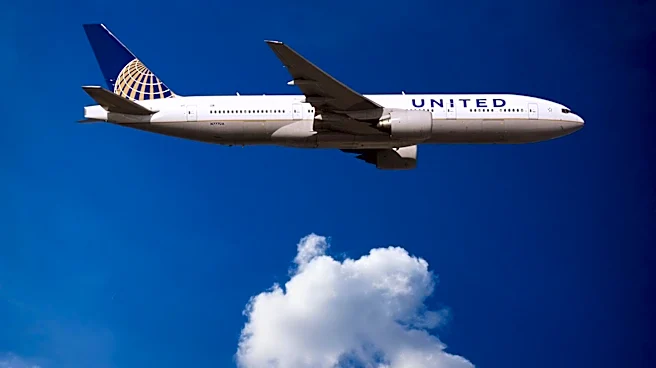
Scott Kirby, CEO of United Airlines, has asserted the airline's strong pricing power, enabling it to maintain higher margins despite various industry challenges. He highlighted that United's premium service mix allows it to increase fares without experiencing
a significant loss of customers. For the fourth quarter, United's yields are projected to rise by a substantial 19% year-over-year. Kirby attributes the broader industry-wide fare increases to structural cost escalations, including a 60% rise in airport fees since COVID-19, as well as increased labor and maintenance expenses. He expressed confidence that United is on track to achieve low double-digit margins without requiring fundamental shifts in the airline industry's structure. Furthermore, Kirby noted that United absorbed a $2.3 billion year-over-year fuel cost increase in the second quarter, recovering approximately half through fare adjustments, and anticipates a full recovery by the fourth quarter.
Why It's Important?
This development is significant for the U.S. airline industry and its consumers. United Airlines' ability to command higher prices, driven by its premium offerings, suggests a potential shift in airline business models towards catering to higher-paying segments. If other airlines follow suit or if the structural cost increases cited by Kirby become pervasive, air travel could become more expensive across the board. This could impact travel patterns, tourism, and business operations that rely on air connectivity. For investors, Kirby's projection of low double-digit margins, even without industry-wide structural changes, indicates a potentially robust financial outlook for United Airlines, contrasting with some competitors who may struggle with profitability. The successful recovery of fuel headwinds also demonstrates the airline's resilience and strategic pricing capabilities in a volatile market.
What's Next?
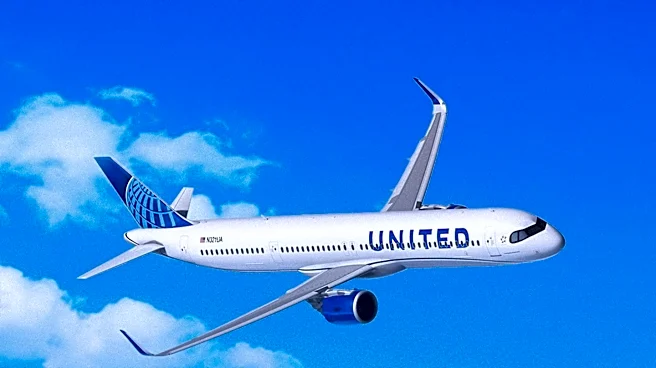
United Airlines is expected to continue leveraging its premium strategy and international expansion to drive revenue and margin growth. The airline recently announced its largest international expansion, adding 10 new international cities for 2027, with eight of these routes being exclusive to United among U.S. carriers. The introduction of the Airbus A321XLR aircraft, configured with more premium cabins, is central to this strategy, allowing United to serve smaller, high-yield international markets. The next key indicator will be the third-quarter earnings report, where the market will scrutinize whether revenue per available seat mile (RASM) accelerates beyond the second quarter's 12% and if the projected 80-90% fuel cost recovery is confirmed. These metrics will provide further insight into the sustainability of United's pricing power and its trajectory towards targeted double-digit margins.
Beyond the Headlines
The emphasis on premium services and the ability to pass on increased costs to consumers could signal a broader trend in the U.S. airline industry, potentially leading to a more stratified market where budget carriers and full-service airlines diverge further in their offerings and pricing. This could have long-term implications for accessibility of air travel and consumer choice. The structural cost increases, particularly in airport fees and labor, highlight underlying economic pressures that airlines face, which are then translated into higher fares. This situation also raises questions about the competitive landscape, as some carriers may struggle to adapt to these rising costs without the same premium mix or pricing power, potentially leading to consolidation or shifts in market share. The strategic use of new aircraft like the A321XLR to open niche international routes also points to a more sophisticated approach to network planning and revenue optimization.