
What's Happening?
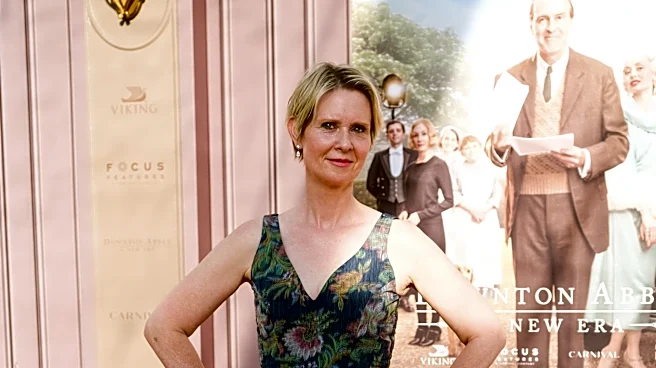
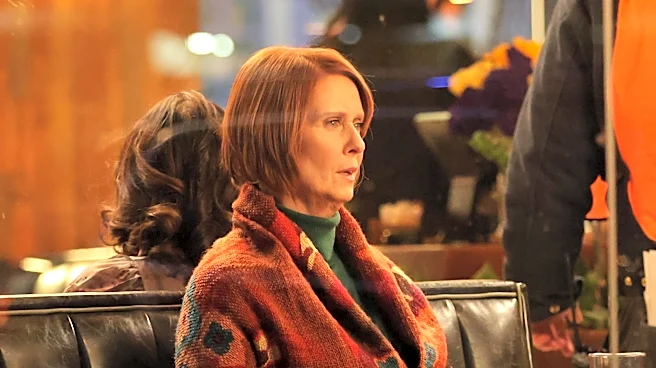
Cynthia Nixon narrates "My Letter to the World," a documentary that delves into the life and work of American poet Emily Dickinson. The film aims to re-evaluate widely accepted narratives about Dickinson,
particularly the portrayal of her as a reclusive figure. It introduces new theories regarding Dickinson's personal relationships and her most celebrated works, offering a fresh perspective on her legacy more than 130 years after her death. The documentary, released in 2017, is 1 hour and 20 minutes long and is categorized as an edifying and smart documentary. It is directed by Solon Papadopoulos and produced by Roy Boulter.
Why It's Important?
This documentary is important because it challenges long-standing historical interpretations of a significant American literary figure, Emily Dickinson. By presenting new theories and re-examining her personal life and poetry, the film encourages a deeper and potentially more accurate understanding of her contributions to American literature. For literary scholars and enthusiasts, it offers a revised framework for analyzing Dickinson's work, potentially influencing future academic discourse and public perception. The involvement of a prominent figure like Cynthia Nixon in the narration also brings wider attention to Dickinson's legacy, ensuring that her work continues to be explored and appreciated by a broader audience. This re-evaluation can lead to a richer cultural understanding of historical figures and their impact.
What's Next?
The continued availability of "My Letter to the World" on platforms like Prime Video suggests that the revised narrative of Emily Dickinson will remain accessible to the public. This accessibility could foster ongoing discussions and debates among literary critics, historians, and the general public about Dickinson's true character and the influences on her poetry. Future academic research might be spurred by the documentary's theories, leading to new publications or interpretations of Dickinson's extensive body of work. The film's success in challenging established views could also inspire similar documentary projects focusing on other historical figures whose lives and legacies might benefit from re-examination, potentially leading to a broader trend in historical and biographical filmmaking.
Beyond the Headlines
Beyond its immediate impact on Emily Dickinson's legacy, this documentary highlights a broader cultural trend of re-evaluating historical figures through a contemporary lens. It underscores the idea that historical narratives are not static but can evolve with new evidence and perspectives. The film implicitly raises questions about how history is constructed and how societal biases or limited information can shape public perception over time. It also demonstrates the power of documentary filmmaking as a medium for historical revisionism and for bringing complex, nuanced stories to a wider audience. This approach encourages critical thinking about the sources and interpretations of historical information, fostering a more dynamic engagement with the past.