







What's Happening?
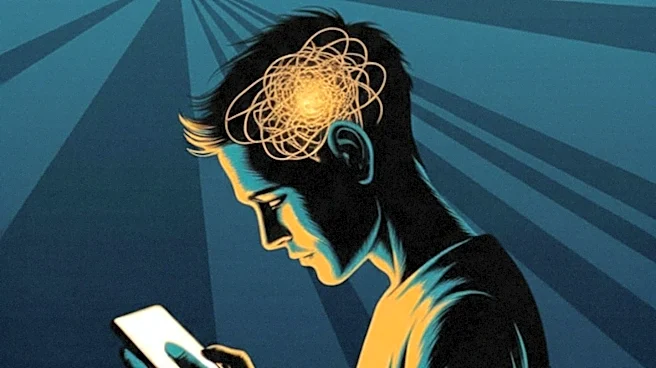
Social media platforms are frequently a source of new wellness trends, often promising significant health benefits with minimal effort. Recent examples include claims that sticking out one's tongue for 40 seconds can relieve stress by stimulating the
vagus nerve and lowering cortisol, and that gargling with water for 30 seconds can prevent colds. While some of these practices, like gargling, have a degree of scientific backing—a 2005 study showed regular water gargling reduced upper respiratory tract infections by 36%—many viral claims lack robust clinical evidence. The issue arises when preliminary or small-scale studies are exaggerated into foolproof solutions, leading to a disconnect between the scientific findings and the promises made online. For instance, the tongue-sticking exercise, while potentially offering a moment of pause, has no strong evidence to support its claims of cortisol reduction or nervous system reset.
Why It's Important?
The proliferation of unsubstantiated wellness claims on social media poses a significant public health concern in the U.S. It can lead individuals to prioritize unproven 'quick fixes' over evidence-based health practices, potentially delaying or replacing effective medical care. This trend can also foster a sense of distrust in established medical science when viral remedies fail to deliver promised results. For consumers, investing time and resources into ineffective treatments can be financially wasteful and emotionally draining. Healthcare providers face the challenge of debunking misinformation and re-educating patients on proven methods for stress management, illness prevention, and overall well-being, such as regular physical activity, adequate sleep, and vaccinations. The appeal of easy solutions highlights a broader societal desire for immediate relief from stress and illness, which can be exploited by misleading online content.
What's Next?
As social media continues to be a primary source of information for many, there will likely be an ongoing need for critical evaluation of wellness trends. Consumers are encouraged to verify claims with credible sources and healthcare professionals before adopting new practices. Platforms themselves may face increasing pressure to moderate health-related content to prevent the spread of misinformation, though this remains a complex challenge. Educational initiatives aimed at improving health literacy and critical thinking skills among the public could help individuals discern between scientifically supported advice and viral exaggerations. Meanwhile, researchers will continue to investigate traditional and novel wellness practices, providing the evidence needed to either validate or refute popular claims, thereby guiding individuals toward truly effective health strategies. The emphasis will remain on foundational health practices like handwashing, adequate sleep, and vaccinations for illness prevention.
Beyond the Headlines
The phenomenon of viral wellness trends reflects a deeper societal yearning for control and simplicity in managing health, especially in the face of complex health challenges and information overload. This desire for 'quick fixes' can be seen as a response to the stresses of modern life, where individuals seek immediate relief and empowerment over their well-being. However, it also underscores a potential vulnerability to marketing tactics that prioritize virality over scientific rigor. Ethically, the spread of unverified health information raises questions about responsibility—from content creators to social media platforms and individual users. Culturally, it highlights a growing reliance on digital sources for health advice, shifting away from traditional authoritative figures in medicine. Addressing this requires not just scientific debunking, but also understanding the psychological and social factors that make these trends so appealing, fostering a more discerning and resilient approach to health information.