








What's Happening?
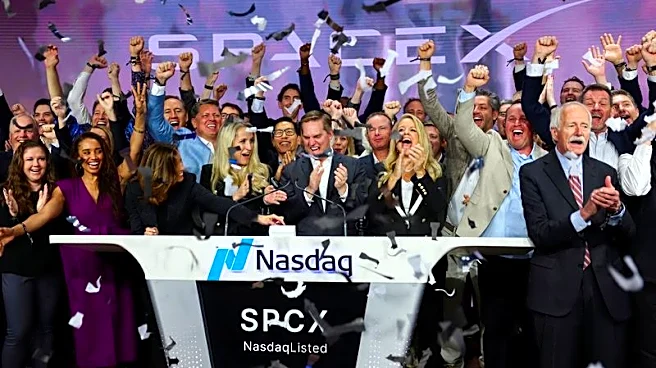
SpaceX has completed the largest initial public offering (IPO) in history, raising approximately $75 billion at a valuation of about $1.75 trillion. This event occurs amidst a significant wave of artificial intelligence (AI) spending by major technology
companies such as Amazon, Microsoft, Alphabet, and Meta Platforms. These companies are projected to invest around $725 billion in capital expenditures this year, primarily on data centers and chips, marking a 77% increase from the previous year. The IPO has sparked debate among investors about whether this surge in AI spending represents a market bubble. Some view the high valuations and heavy spending as indicative of a market peak, while others see it as a necessary response to growing demand.
Why It's Important?
The SpaceX IPO and the associated AI spending highlight a critical juncture in the technology sector. The massive investments by leading tech companies underscore the importance of AI in future business strategies, potentially reshaping industries and economic landscapes. However, the debate over whether this spending is sustainable or indicative of a bubble has significant implications for investors and market stability. If the spending leads to substantial returns, it could validate the aggressive investment strategies. Conversely, if the anticipated returns do not materialize, it could lead to financial instability and reevaluation of AI's role in business growth.
What's Next?
Investors and market analysts will closely monitor the performance of SpaceX and the returns on AI investments by major tech companies. The outcomes will likely influence future investment strategies and market valuations. Additionally, regulatory scrutiny may increase as the financial implications of such large-scale investments become clearer. Companies may need to demonstrate tangible returns on AI investments to maintain investor confidence and justify continued spending.