



What's Happening?
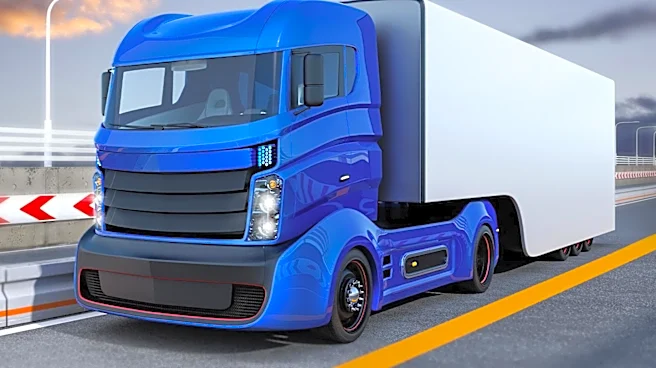
Advanced Micro Devices (AMD) has announced that its EPYC processors are now integrated into Kodiak AI's seventh-generation autonomous truck platform. This collaboration aims to significantly improve the compute performance, processing speed, and power
efficiency of Kodiak Driver, Kodiak AI's autonomous driving system. Kodiak AI is the first autonomous trucking company to deploy AMD's EPYC processors in its hardware. Autonomous vehicles, particularly trucks, rely on a multitude of sensors such as LiDARs, radars, and cameras to detect objects and navigate. This generates vast amounts of data every second, necessitating ultra-fast processing speeds and high compute performance. AMD EPYC CPUs address these demands by handling path planning, localization, logistics, and timing-sensitive general-purpose processing. The processors provide 80 PCIe lanes and a high core frequency, with a base frequency of 3.15 GHz and a max boost frequency of up to 4.4 GHz, representing a 25% increase in clock speeds compared to the previous generation. This allows Kodiak trucks to process heavy data loads more quickly and support sophisticated AI workloads for real-time assessment and reaction.
Why It's Important?
The integration of AMD EPYC processors into Kodiak AI's autonomous trucking platform marks a significant advancement in the autonomous vehicle industry. This development is crucial for the commercial scaling of driverless trucks, as it addresses the critical need for high-performance computing in processing massive sensor data and complex AI workloads. Enhanced processing capabilities mean safer and more reliable autonomous systems, which can accelerate the adoption of self-driving technology in logistics and transportation. For AMD, this partnership solidifies its position as a key technology provider in the automotive sector, particularly in the rapidly evolving field of autonomous driving. It demonstrates the versatility and power of AMD's EPYC processors beyond traditional data center applications. The success of this collaboration could lead to broader adoption of AMD's silicon and software solutions across the automotive industry, impacting the competitive landscape among semiconductor manufacturers and potentially driving further innovation in high-performance computing for specialized applications.
What's Next?
The immediate next steps involve the continued deployment and testing of Kodiak AI's autonomous trucks equipped with AMD EPYC processors. The focus will be on demonstrating the enhanced performance and efficiency in real-world scenarios, particularly on public highways. Success in these deployments could lead to increased commercial orders for Kodiak AI and further solidify AMD's role in the autonomous vehicle supply chain. Other autonomous driving companies and automotive manufacturers will likely observe the outcomes of this collaboration closely, potentially influencing their future technology choices. AMD is expected to continue developing and refining its high-performance CPUs, GPUs, FPGAs, and adaptive SoCs to meet the evolving demands of the automotive industry, including in-vehicle infotainment, advanced driver-assistance systems, and networking applications. The long-term goal for both companies is to accelerate the launch and widespread adoption of driverless trucks, transforming the logistics and transportation sectors.
Beyond the Headlines
This partnership between AMD and Kodiak AI highlights a broader trend of specialized high-performance computing becoming indispensable for the advancement of physical AI systems. The ethical and regulatory implications of increasingly sophisticated autonomous vehicles are profound, requiring robust and verifiable performance from underlying hardware. The ability of AMD EPYC processors to handle massive data streams and complex AI workloads in real-time is not just a technical achievement but a foundational element for building trust and ensuring safety in autonomous operations. This collaboration also underscores the shift towards a 'one-stop shop' approach for silicon and software solutions in the automotive industry, where functional safety is paramount. As autonomous technology matures, the demand for integrated, high-performance, and secure computing platforms will only grow, pushing the boundaries of what is possible in AI and embedded systems. The long-term societal impact includes potential changes in employment for truck drivers, increased efficiency in supply chains, and new regulatory frameworks for autonomous operations.