







What's Happening?
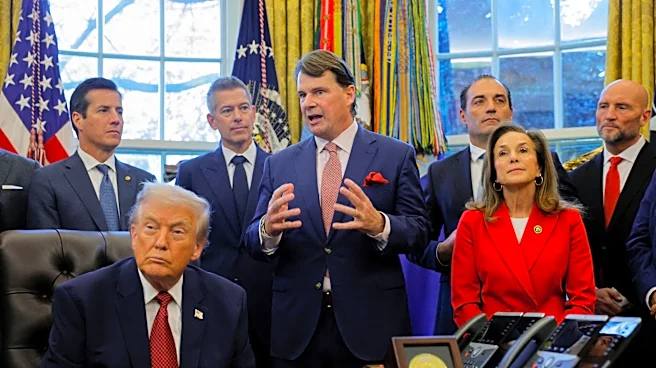
General Motors CEO Mary Barra has identified a 'societal problem' in the United States regarding the perception and pursuit of skilled trades. Speaking on Fortune’s *Titans and Disruptors of Industry* podcast, Barra emphasized that blue-collar careers
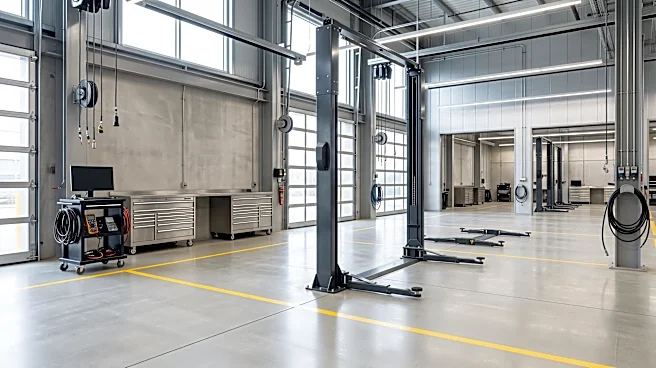
offer significant earning potential, with technicians capable of making $80,000 to $90,000 annually, and potentially more. She also suggested these roles might be more 'AI-proof' than some white-collar professions. Barra noted that Europe demonstrates greater respect for skilled trades, which involve technical work, manual labor, and the creation and servicing of goods. In response to this challenge, GM has committed nearly $200 million to expand and modernize high-demand skilled trades, as well as advanced manufacturing, engineering, and technician positions. This investment aims to boost community-based training and upgrade facilities, including manufacturing plants, technical centers, and dealership service bays. The company has already placed approximately 90 new skilled trades apprentices across its U.S. manufacturing divisions.
Why It's Important?
This initiative is crucial for addressing a significant labor gap in the U.S. economy, with an estimated 2.1 million skilled trades jobs projected to go unfilled by 2030, according to the Alliance for America’s Skilled Trades. The demand for skilled workers, particularly electricians, is surging due to the expansion of AI and the data center boom, requiring over 300,000 new electricians in the next decade. The emphasis on skilled trades also offers a pathway to six-figure earnings for Gen Z, providing an alternative to traditional four-year college degrees and potentially mitigating the impact of AI on white-collar jobs. Business leaders like JPMorgan Chase CEO Jamie Dimon and BlackRock CEO Larry Fink have also voiced concerns about the shortage, highlighting its potential to hinder American investment and defense industrial base expansion. This investment by GM, a major U.S. automotive manufacturer, underscores a broader industry recognition of the need to cultivate a skilled workforce to support economic growth and technological advancement.
What's Next?
GM's $200 million investment will continue to fund community-based training programs and facility upgrades, aiming to increase the number of skilled trades professionals. The company's ongoing apprenticeship placements will likely expand, providing more opportunities for individuals to enter these fields. The broader conversation initiated by leaders like Barra, Dimon, and Fink is expected to encourage more high school students and young adults to consider skilled trades as viable and lucrative career paths. This shift in perception could lead to increased enrollment in vocational training programs and a stronger focus on hands-on skills development across the U.S. education system. The Alliance for America’s Skilled Trades, a coalition including BlackRock, Carhartt, Ford Motor Company, and Google, will likely continue its efforts to address the labor gap, potentially leading to further industry-wide initiatives and policy discussions aimed at bolstering the skilled trades workforce.
Beyond the Headlines
The push for skilled trades addresses a deeper societal issue regarding the value placed on different types of labor. Barra's observation that Europe holds greater respect for trades highlights a cultural disparity in the U.S., where white-collar professions have often been prioritized. This initiative could help rebalance this perception, fostering a greater appreciation for the essential work performed by skilled tradespeople. Furthermore, the 'AI-proof' nature of many blue-collar jobs suggests a long-term shift in the labor market, where practical, hands-on skills may offer more job security in an increasingly automated world. This could lead to a re-evaluation of educational pathways and career counseling, emphasizing vocational training and apprenticeships as equally, if not more, valuable than traditional college degrees for certain sectors. The focus on skilled trades also has implications for national security and infrastructure, as a robust workforce is critical for building and maintaining essential systems and supporting the defense industry.